Ai career coach
Ai career coach
Ai career coach
How to Use an AI-Powered Interview Preparation Tools to Get Hired Faster?
How to Use an AI-Powered Interview Preparation Tools to Get Hired Faster?
How to Use an AI-Powered Interview Preparation Tools to Get Hired Faster?
17 Feb 2026
17 Feb 2026
17 Feb 2026
Preparing for interviews can feel stressful, especially when you are unsure what employers will ask. This is where ai interview preparation tools are changing the game. These tools help candidates practice smarter, refine their answers, and walk into interviews with real confidence instead of guesswork.
Instead of rehearsing random questions alone, AI-powered platforms simulate realistic interviews, analyze your responses, and provide detailed feedback. When used correctly, they can significantly improve your chances of getting hired faster.
Let’s look at how to actually use these tools in a practical way.
Why AI Interview Preparation Tools Are Becoming Essential
The job market is competitive. Employers often receive hundreds of applications for one position. By the time you get an interview, you are already competing with strong candidates.
Ai interview preparation tools help you prepare in a structured way. They analyze common questions for your industry, evaluate your tone and clarity, and even track filler words or weak phrasing. Instead of practicing blindly, you get data-driven feedback that shows exactly where to improve.
Another advantage is repetition without pressure. You can practice as many times as you want without feeling judged. This helps reduce anxiety and improve delivery.
How to Use AI Interview Preparation Tools Effectively
Simply signing up is not enough. To get real results, you need to use these tools strategically. Here is a step-by-step approach to make them work in your favor:
Choose role-specific interview simulations instead of general question banks
Select practice sessions that match your target job title or industry. Focused simulations mirror real interview expectations and prepare you for technical, behavioral, and situational questions commonly asked in that specific role.Record your answers to evaluate tone, clarity, and confidence
Many AI platforms allow video or voice recording. Reviewing your performance helps you notice nervous habits, rushed explanations, or unclear responses that could affect how interviewers perceive your professionalism.Use feedback reports to refine weak or incomplete answers
After each session, carefully read the AI-generated feedback. Identify areas where your answers lacked structure, measurable results, or relevance, then rewrite and practice improved versions until they sound natural.Practice behavioral questions using structured frameworks like STAR
AI interview preparation tools often suggest response structures. Apply frameworks consistently so your answers include situation, task, action, and result, making them clear, organized, and easy for recruiters to follow.Simulate time pressure to improve real interview performance
Set strict time limits during practice sessions. This trains you to deliver concise, focused responses without rambling, which is especially important in panel or technical interviews with limited speaking time.Track improvement over multiple sessions for measurable growth
Do not rely on a single practice attempt. Complete several sessions across days or weeks and monitor improvement in clarity, confidence scores, and response strength to ensure consistent progress.Customize practice sessions based on company research
If you have an upcoming interview, tailor practice questions to the company’s values, mission, or recent projects. This makes your responses more aligned and demonstrates genuine preparation during the real interview.Combine AI practice with mock interviews from real people
While AI feedback is detailed, adding occasional human mock interviews improves adaptability. This combination strengthens both structured responses and spontaneous communication skills needed in unpredictable situations.
How AI Interview Preparation Tools Improve Confidence
Confidence often comes from familiarity. The more you practice realistic scenarios, the less intimidating the actual interview feels.
With ai interview preparation tools, you are not just memorizing answers. You are refining delivery, adjusting tone, and learning how to structure thoughts quickly. Over time, this reduces filler words, awkward pauses, and rushed explanations.
Another hidden benefit is clarity. Many candidates know their experience well but struggle to present it clearly. AI feedback highlights when your examples lack measurable outcomes or strong action verbs. Fixing these small details makes your answers stronger and more persuasive.
Common Mistakes to Avoid When Using AI Interview Preparation Tools
Some candidates use these platforms incorrectly and do not see results. One mistake is memorizing responses word for word. Interviews require natural conversation, not robotic repetition.
Another issue is ignoring feedback. The value of AI tools lies in analysis. If you skip reviewing improvement suggestions, you miss the opportunity to grow.
It is also important not to rely only on generic questions. Focus on role-specific and company-specific preparation whenever possible.
Finally, avoid cramming all practice into one day. Short, consistent sessions over time build better retention and confidence.
Turning Practice into Job Offers
The real goal of using ai interview preparation tools is not just better answers. It is faster hiring results. When you speak clearly, provide structured examples, and demonstrate preparation, interviewers notice.
Candidates who prepare with data-driven feedback often appear more polished and self-aware. They communicate achievements with measurable results and align answers with job requirements. These small differences can determine who receives the offer.
Interviews are not about perfection. They are about clarity, relevance, and confidence. AI-powered preparation helps you improve all three in a practical way.
If used consistently and strategically, these tools can shorten your job search timeline and give you a strong competitive edge in today’s hiring market.
Preparing for interviews can feel stressful, especially when you are unsure what employers will ask. This is where ai interview preparation tools are changing the game. These tools help candidates practice smarter, refine their answers, and walk into interviews with real confidence instead of guesswork.
Instead of rehearsing random questions alone, AI-powered platforms simulate realistic interviews, analyze your responses, and provide detailed feedback. When used correctly, they can significantly improve your chances of getting hired faster.
Let’s look at how to actually use these tools in a practical way.
Why AI Interview Preparation Tools Are Becoming Essential
The job market is competitive. Employers often receive hundreds of applications for one position. By the time you get an interview, you are already competing with strong candidates.
Ai interview preparation tools help you prepare in a structured way. They analyze common questions for your industry, evaluate your tone and clarity, and even track filler words or weak phrasing. Instead of practicing blindly, you get data-driven feedback that shows exactly where to improve.
Another advantage is repetition without pressure. You can practice as many times as you want without feeling judged. This helps reduce anxiety and improve delivery.
How to Use AI Interview Preparation Tools Effectively
Simply signing up is not enough. To get real results, you need to use these tools strategically. Here is a step-by-step approach to make them work in your favor:
Choose role-specific interview simulations instead of general question banks
Select practice sessions that match your target job title or industry. Focused simulations mirror real interview expectations and prepare you for technical, behavioral, and situational questions commonly asked in that specific role.Record your answers to evaluate tone, clarity, and confidence
Many AI platforms allow video or voice recording. Reviewing your performance helps you notice nervous habits, rushed explanations, or unclear responses that could affect how interviewers perceive your professionalism.Use feedback reports to refine weak or incomplete answers
After each session, carefully read the AI-generated feedback. Identify areas where your answers lacked structure, measurable results, or relevance, then rewrite and practice improved versions until they sound natural.Practice behavioral questions using structured frameworks like STAR
AI interview preparation tools often suggest response structures. Apply frameworks consistently so your answers include situation, task, action, and result, making them clear, organized, and easy for recruiters to follow.Simulate time pressure to improve real interview performance
Set strict time limits during practice sessions. This trains you to deliver concise, focused responses without rambling, which is especially important in panel or technical interviews with limited speaking time.Track improvement over multiple sessions for measurable growth
Do not rely on a single practice attempt. Complete several sessions across days or weeks and monitor improvement in clarity, confidence scores, and response strength to ensure consistent progress.Customize practice sessions based on company research
If you have an upcoming interview, tailor practice questions to the company’s values, mission, or recent projects. This makes your responses more aligned and demonstrates genuine preparation during the real interview.Combine AI practice with mock interviews from real people
While AI feedback is detailed, adding occasional human mock interviews improves adaptability. This combination strengthens both structured responses and spontaneous communication skills needed in unpredictable situations.
How AI Interview Preparation Tools Improve Confidence
Confidence often comes from familiarity. The more you practice realistic scenarios, the less intimidating the actual interview feels.
With ai interview preparation tools, you are not just memorizing answers. You are refining delivery, adjusting tone, and learning how to structure thoughts quickly. Over time, this reduces filler words, awkward pauses, and rushed explanations.
Another hidden benefit is clarity. Many candidates know their experience well but struggle to present it clearly. AI feedback highlights when your examples lack measurable outcomes or strong action verbs. Fixing these small details makes your answers stronger and more persuasive.
Common Mistakes to Avoid When Using AI Interview Preparation Tools
Some candidates use these platforms incorrectly and do not see results. One mistake is memorizing responses word for word. Interviews require natural conversation, not robotic repetition.
Another issue is ignoring feedback. The value of AI tools lies in analysis. If you skip reviewing improvement suggestions, you miss the opportunity to grow.
It is also important not to rely only on generic questions. Focus on role-specific and company-specific preparation whenever possible.
Finally, avoid cramming all practice into one day. Short, consistent sessions over time build better retention and confidence.
Turning Practice into Job Offers
The real goal of using ai interview preparation tools is not just better answers. It is faster hiring results. When you speak clearly, provide structured examples, and demonstrate preparation, interviewers notice.
Candidates who prepare with data-driven feedback often appear more polished and self-aware. They communicate achievements with measurable results and align answers with job requirements. These small differences can determine who receives the offer.
Interviews are not about perfection. They are about clarity, relevance, and confidence. AI-powered preparation helps you improve all three in a practical way.
If used consistently and strategically, these tools can shorten your job search timeline and give you a strong competitive edge in today’s hiring market.
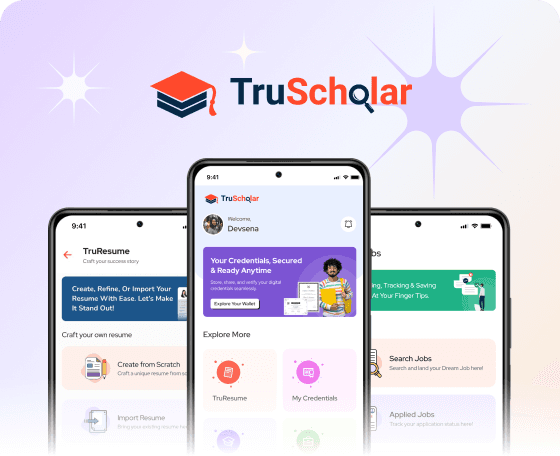
Unlock Your Career With the TruScholar AI Career Coach
Download The App Now


Issue Digital Credetials, Certificate, marksheet instant with Secure Blockchain Technology.
Read More Blogs
Read More Blogs
Read More Blogs
Ai career coach
Role of AI in Indian Education System
2 Mar 2026
AI career coach
AI for Career Guidance in India: How Students Can Take Benefit of AI?
27 Feb 2026
Ai Career coach
How AI Can Fix Learning Gaps in Indian Education
27 Feb 2026
Ai career coach
AI Skills Indian Students Must Learn for Future Jobs
26 Feb 2026
Ai career coach
The Impact of Artificial Intelligence on Education in India
25 Feb 2026
Ai career coach
The Role of AI in Education and Learning
24 Feb 2026
Ai career coach
Role of AI in Indian Education System
2 Mar 2026
AI career coach
AI for Career Guidance in India: How Students Can Take Benefit of AI?
27 Feb 2026
Ai Career coach
How AI Can Fix Learning Gaps in Indian Education
27 Feb 2026
Ai career coach
AI Skills Indian Students Must Learn for Future Jobs
26 Feb 2026
Ai career coach
Role of AI in Indian Education System
2 Mar 2026
AI career coach
AI for Career Guidance in India: How Students Can Take Benefit of AI?
27 Feb 2026
Ai Career coach
How AI Can Fix Learning Gaps in Indian Education
27 Feb 2026
Ai career coach
AI Skills Indian Students Must Learn for Future Jobs
26 Feb 2026