Ai Career coach
Ai Career coach
Ai Career coach
How AI Helps Students Select the Best Academic Courses?
How AI Helps Students Select the Best Academic Courses?
How AI Helps Students Select the Best Academic Courses?
Choosing the right academic course can shape a student’s entire career. With hundreds of degree programs, certifications, and electives available, many students feel overwhelmed. This is where technology is making a real difference. Today, ai helps students select academic courses in a smarter and more structured way.
Instead of relying only on advice from friends or general online searches, students can now use AI-driven tools to match their strengths, interests, and long-term goals with the most suitable academic options. The result is clearer direction and fewer costly mistakes.
Why Course Selection Is More Complex Than Before
In the past, students often chose traditional paths like engineering, medicine, or business because those were seen as stable careers. Today, industries are evolving rapidly. New fields such as data science, digital marketing, artificial intelligence, and sustainability have opened up career opportunities that did not exist a decade ago.
This expansion makes decision-making harder. Students must think about job demand, skill requirements, industry growth, and personal interest. When ai helps students select academic courses, it analyzes these multiple factors together rather than focusing on just one.
AI tools consider academic performance, aptitude tests, skill assessments, and even job market trends. This comprehensive approach makes course selection more data-driven and less based on guesswork.
How AI Helps Students Select Academic Courses Using Data and Personalization
Modern AI platforms combine student information with real-world career data to provide personalized recommendations. Instead of suggesting popular degrees, they recommend courses aligned with individual strengths and future opportunities.
Here are the key ways ai helps students select academic courses effectively:
Analyzing academic strengths and performance trends across subjects
AI evaluates grades, subject preferences, and performance patterns to identify areas where students naturally excel, helping them focus on courses aligned with their strongest competencies.Matching student interests with emerging industry demands
The system compares career interests with labor market data, ensuring recommended courses lead to industries that show consistent growth and long-term employment opportunities.Identifying required skills for targeted career paths early
AI tools break down desired careers into essential technical and soft skills, allowing students to choose academic programs that directly support those competencies.Providing personalized course comparison insights
Instead of general descriptions, AI platforms compare curriculum content, specialization options, and career outcomes, helping students understand the practical impact of each academic choice.Simulating long-term career pathways before enrollment decisions
Students can explore projected career progression based on selected courses, giving them a realistic understanding of salary growth, role evolution, and advancement opportunities.Highlighting skill gaps before selecting advanced programs
If a student lacks foundational knowledge for a specialized field, AI tools recommend prerequisite courses to build readiness and avoid academic struggle later.Adapting recommendations as goals and interests evolve
As students update preferences or performance data, AI systems adjust course suggestions dynamically, ensuring recommendations remain relevant over time.Reducing decision anxiety through structured guidance reports
Clear dashboards and detailed explanations help students understand why certain courses are recommended, replacing confusion with transparent reasoning.
Supporting Career-Focused Academic Planning
When ai helps students select academic courses, it does more than recommend degrees. It connects education directly to employability.
For example, a student interested in technology might assume computer science is the only option. AI tools may reveal alternatives such as data analytics, cybersecurity, or information systems based on aptitude and industry demand. This broader perspective prevents narrow decision-making.
AI can also show how combining majors or adding certifications increases career flexibility. A business student, for instance, might benefit from adding data analysis electives to stay competitive in a data-driven economy.
This strategic alignment between education and career planning helps students avoid switching majors multiple times, saving both time and tuition costs.
Encouraging Informed and Confident Decisions
One of the biggest benefits when ai helps students select academic courses is confidence. Students feel more secure in their decisions when they understand the reasoning behind them.
Instead of choosing a course simply because it is popular, they choose it because it matches their strengths, interests, and future job prospects. This clarity increases motivation and academic engagement.
Parents and advisors also benefit from AI-generated reports. Clear insights and data-backed recommendations make discussions about course selection more objective and productive.
Practical Tips for Students Using AI Tools for Course Selection
To get accurate recommendations, students should provide honest and complete information about interests, skills, and career goals. Inaccurate inputs lead to less useful outputs.
It is also important to review recommendations thoughtfully. AI provides direction, but personal reflection remains essential. Students should consider whether suggested courses truly align with their long-term aspirations.
Exploring multiple career scenarios can also be helpful. Many AI tools allow students to compare different paths side by side. This broader exploration often reveals opportunities they may not have previously considered.
Finally, students should revisit AI insights periodically. Interests and market demands change, and staying flexible ensures academic decisions remain aligned with evolving goals.
Preparing for a Smarter Academic Future
Education is becoming more personalized, and technology is playing a central role in that transformation. When ai helps students select academic courses, it reduces uncertainty and connects academic choices directly to career outcomes.
The goal is not to let AI make decisions automatically. Instead, it acts as a powerful advisor that organizes information, analyzes trends, and highlights the best possible paths.
Students who use AI-based guidance early can build stronger academic foundations, avoid unnecessary detours, and enter the job market with skills that truly match industry needs. In a world where career landscapes shift quickly, informed course selection is one of the smartest steps a student can take.
Choosing the right academic course can shape a student’s entire career. With hundreds of degree programs, certifications, and electives available, many students feel overwhelmed. This is where technology is making a real difference. Today, ai helps students select academic courses in a smarter and more structured way.
Instead of relying only on advice from friends or general online searches, students can now use AI-driven tools to match their strengths, interests, and long-term goals with the most suitable academic options. The result is clearer direction and fewer costly mistakes.
Why Course Selection Is More Complex Than Before
In the past, students often chose traditional paths like engineering, medicine, or business because those were seen as stable careers. Today, industries are evolving rapidly. New fields such as data science, digital marketing, artificial intelligence, and sustainability have opened up career opportunities that did not exist a decade ago.
This expansion makes decision-making harder. Students must think about job demand, skill requirements, industry growth, and personal interest. When ai helps students select academic courses, it analyzes these multiple factors together rather than focusing on just one.
AI tools consider academic performance, aptitude tests, skill assessments, and even job market trends. This comprehensive approach makes course selection more data-driven and less based on guesswork.
How AI Helps Students Select Academic Courses Using Data and Personalization
Modern AI platforms combine student information with real-world career data to provide personalized recommendations. Instead of suggesting popular degrees, they recommend courses aligned with individual strengths and future opportunities.
Here are the key ways ai helps students select academic courses effectively:
Analyzing academic strengths and performance trends across subjects
AI evaluates grades, subject preferences, and performance patterns to identify areas where students naturally excel, helping them focus on courses aligned with their strongest competencies.Matching student interests with emerging industry demands
The system compares career interests with labor market data, ensuring recommended courses lead to industries that show consistent growth and long-term employment opportunities.Identifying required skills for targeted career paths early
AI tools break down desired careers into essential technical and soft skills, allowing students to choose academic programs that directly support those competencies.Providing personalized course comparison insights
Instead of general descriptions, AI platforms compare curriculum content, specialization options, and career outcomes, helping students understand the practical impact of each academic choice.Simulating long-term career pathways before enrollment decisions
Students can explore projected career progression based on selected courses, giving them a realistic understanding of salary growth, role evolution, and advancement opportunities.Highlighting skill gaps before selecting advanced programs
If a student lacks foundational knowledge for a specialized field, AI tools recommend prerequisite courses to build readiness and avoid academic struggle later.Adapting recommendations as goals and interests evolve
As students update preferences or performance data, AI systems adjust course suggestions dynamically, ensuring recommendations remain relevant over time.Reducing decision anxiety through structured guidance reports
Clear dashboards and detailed explanations help students understand why certain courses are recommended, replacing confusion with transparent reasoning.
Supporting Career-Focused Academic Planning
When ai helps students select academic courses, it does more than recommend degrees. It connects education directly to employability.
For example, a student interested in technology might assume computer science is the only option. AI tools may reveal alternatives such as data analytics, cybersecurity, or information systems based on aptitude and industry demand. This broader perspective prevents narrow decision-making.
AI can also show how combining majors or adding certifications increases career flexibility. A business student, for instance, might benefit from adding data analysis electives to stay competitive in a data-driven economy.
This strategic alignment between education and career planning helps students avoid switching majors multiple times, saving both time and tuition costs.
Encouraging Informed and Confident Decisions
One of the biggest benefits when ai helps students select academic courses is confidence. Students feel more secure in their decisions when they understand the reasoning behind them.
Instead of choosing a course simply because it is popular, they choose it because it matches their strengths, interests, and future job prospects. This clarity increases motivation and academic engagement.
Parents and advisors also benefit from AI-generated reports. Clear insights and data-backed recommendations make discussions about course selection more objective and productive.
Practical Tips for Students Using AI Tools for Course Selection
To get accurate recommendations, students should provide honest and complete information about interests, skills, and career goals. Inaccurate inputs lead to less useful outputs.
It is also important to review recommendations thoughtfully. AI provides direction, but personal reflection remains essential. Students should consider whether suggested courses truly align with their long-term aspirations.
Exploring multiple career scenarios can also be helpful. Many AI tools allow students to compare different paths side by side. This broader exploration often reveals opportunities they may not have previously considered.
Finally, students should revisit AI insights periodically. Interests and market demands change, and staying flexible ensures academic decisions remain aligned with evolving goals.
Preparing for a Smarter Academic Future
Education is becoming more personalized, and technology is playing a central role in that transformation. When ai helps students select academic courses, it reduces uncertainty and connects academic choices directly to career outcomes.
The goal is not to let AI make decisions automatically. Instead, it acts as a powerful advisor that organizes information, analyzes trends, and highlights the best possible paths.
Students who use AI-based guidance early can build stronger academic foundations, avoid unnecessary detours, and enter the job market with skills that truly match industry needs. In a world where career landscapes shift quickly, informed course selection is one of the smartest steps a student can take.
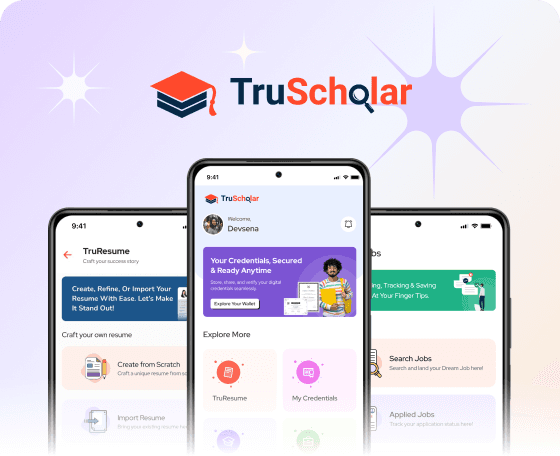
Unlock Your Career With the TruScholar AI Career Coach
Download The App Now


Issue Digital Credetials, Certificate, marksheet instant with Secure Blockchain Technology.
Read More Blogs
Read More Blogs
Read More Blogs
Ai career coach
Role of AI in Indian Education System
AI career coach
AI for Career Guidance in India: How Students Can Take Benefit of AI?
Ai Career coach
How AI Can Fix Learning Gaps in Indian Education
Ai career coach
AI Skills Indian Students Must Learn for Future Jobs
Ai career coach
The Impact of Artificial Intelligence on Education in India
Ai career coach
The Role of AI in Education and Learning