Ai Career coach
Ai Career coach
Ai Career coach
How Students Find Skill Gaps Using AI Career Coach Tools
How Students Find Skill Gaps Using AI Career Coach Tools
How Students Find Skill Gaps Using AI Career Coach Tools
20 Feb 2026
20 Feb 2026
20 Feb 2026
Choosing a career path is one challenge. Knowing what skills you actually need for that path is another. Many students assume they are prepared because they are earning a degree, but employers often expect practical competencies that go beyond classroom learning. This is where ai career coach tools are becoming incredibly valuable.
These tools help students identify exactly where they stand compared to industry expectations. Instead of guessing which skills to develop, students receive structured, data-driven insights. The result is a clear, personalized learning roadmap rather than random course selection.
Why Identifying Skill Gaps Early Matters
A skill gap is the difference between the abilities you currently have and the abilities required for your target job. For students, this gap can include technical skills, soft skills, certifications, project experience, or even communication ability.
When students use ai career coach tools, they can see these gaps early in their academic journey. That early awareness allows them to take action before graduation rather than realizing shortcomings during job interviews.
Employers are increasingly focused on job-ready candidates. Students who understand their skill gaps can build internships, projects, and certifications into their schedule strategically instead of reacting at the last minute.
How AI Career Coach Tools Detect Skill Gaps
Modern AI platforms use a combination of profile analysis, job market data, and role-based comparisons to identify missing skills. Instead of relying on generic advice, they generate highly specific recommendations.
Here are the key ways ai career coach tools help students uncover skill gaps:
Comparing student profiles with real-time job market requirements
AI systems scan current job descriptions across industries and compare required qualifications with the student’s existing skills, highlighting specific gaps that need attention for targeted career roles.Analyzing academic coursework against industry expectations
The platform evaluates completed subjects and certifications to determine whether they align with current employer demands, identifying areas where practical application or advanced knowledge is missing.Assessing soft skills through simulated assessments and responses
Many AI tools evaluate communication clarity, leadership indicators, and problem-solving approaches through practice sessions, revealing non-technical skill gaps that influence employability.Providing personalized skill gap reports with prioritized recommendations
Instead of listing dozens of missing skills, AI systems rank them based on importance and urgency, helping students focus on what will make the greatest impact first.Tracking progress as students complete learning milestones
AI dashboards monitor certifications, completed courses, and project experiences, updating the skill gap analysis dynamically as students improve their qualifications.Suggesting practical learning resources aligned with specific deficiencies
Rather than vague suggestions, the tools recommend targeted courses, online programs, internships, or hands-on projects designed to close each identified gap efficiently.Offering career pathway simulations to test readiness levels
Students can explore multiple career paths and see how prepared they are for each one, helping them decide whether to specialize further or adjust their goals.Integrating feedback from mock interviews and resume reviews
AI platforms connect interview performance data with skill gap insights, showing students how communication or technical weaknesses may affect hiring outcomes.
Turning Skill Gaps into Action Plans
Identifying a gap is only the first step. The real benefit of ai career coach tools is their ability to transform those insights into actionable plans.
For example, if a student wants to become a data analyst but lacks proficiency in data visualization tools, the AI might recommend specific software training, portfolio projects, and relevant certifications. It may also suggest internships where those skills can be practiced in real-world settings.
Instead of feeling overwhelmed by missing qualifications, students receive a structured path forward. This clarity reduces anxiety and increases motivation.
Another advantage is time efficiency. Students often waste months taking courses that do not directly improve employability. AI-generated plans prioritize learning activities that align closely with hiring trends.
Building Confidence Before Entering the Job Market
One hidden benefit of using ai career coach tools is confidence. When students can see measurable improvement in their profiles, they feel more prepared to apply for internships and entry-level roles.
Confidence grows when progress is visible. As certifications are completed and skill gaps shrink, the AI updates readiness scores. This measurable growth helps students move from uncertainty to preparation.
It also encourages proactive behavior. Instead of waiting for final-year placements, students can start building competitive profiles early in their academic journey.
Practical Tips for Students Using AI Career Coach Tools
To get the most accurate analysis, students should keep their profiles updated with projects, internships, certifications, and extracurricular activities. The more complete the data, the more precise the recommendations.
It is also important to review skill gap reports regularly. Job market trends change quickly. A skill that was optional last year may become essential this year.
Students should focus on mastering high-priority skills first rather than trying to improve everything at once. A targeted approach produces faster and more visible results.
Finally, combining AI insights with mentorship can strengthen outcomes. While AI identifies gaps objectively, mentors provide context about industry expectations and workplace realities.
Preparing for a Competitive Future
The transition from education to employment can feel uncertain. However, students who actively use ai career coach tools gain a structured advantage. They understand what employers expect, where they currently stand, and what actions will close the gap.
In a competitive job market, preparation is no longer optional. Students who identify skill gaps early and address them strategically are more likely to secure internships, perform well in interviews, and begin their careers with confidence.
AI does not replace effort. It directs it. By turning uncertainty into clarity and gaps into goals, these tools help students move from learning theory to building real-world readiness.
Choosing a career path is one challenge. Knowing what skills you actually need for that path is another. Many students assume they are prepared because they are earning a degree, but employers often expect practical competencies that go beyond classroom learning. This is where ai career coach tools are becoming incredibly valuable.
These tools help students identify exactly where they stand compared to industry expectations. Instead of guessing which skills to develop, students receive structured, data-driven insights. The result is a clear, personalized learning roadmap rather than random course selection.
Why Identifying Skill Gaps Early Matters
A skill gap is the difference between the abilities you currently have and the abilities required for your target job. For students, this gap can include technical skills, soft skills, certifications, project experience, or even communication ability.
When students use ai career coach tools, they can see these gaps early in their academic journey. That early awareness allows them to take action before graduation rather than realizing shortcomings during job interviews.
Employers are increasingly focused on job-ready candidates. Students who understand their skill gaps can build internships, projects, and certifications into their schedule strategically instead of reacting at the last minute.
How AI Career Coach Tools Detect Skill Gaps
Modern AI platforms use a combination of profile analysis, job market data, and role-based comparisons to identify missing skills. Instead of relying on generic advice, they generate highly specific recommendations.
Here are the key ways ai career coach tools help students uncover skill gaps:
Comparing student profiles with real-time job market requirements
AI systems scan current job descriptions across industries and compare required qualifications with the student’s existing skills, highlighting specific gaps that need attention for targeted career roles.Analyzing academic coursework against industry expectations
The platform evaluates completed subjects and certifications to determine whether they align with current employer demands, identifying areas where practical application or advanced knowledge is missing.Assessing soft skills through simulated assessments and responses
Many AI tools evaluate communication clarity, leadership indicators, and problem-solving approaches through practice sessions, revealing non-technical skill gaps that influence employability.Providing personalized skill gap reports with prioritized recommendations
Instead of listing dozens of missing skills, AI systems rank them based on importance and urgency, helping students focus on what will make the greatest impact first.Tracking progress as students complete learning milestones
AI dashboards monitor certifications, completed courses, and project experiences, updating the skill gap analysis dynamically as students improve their qualifications.Suggesting practical learning resources aligned with specific deficiencies
Rather than vague suggestions, the tools recommend targeted courses, online programs, internships, or hands-on projects designed to close each identified gap efficiently.Offering career pathway simulations to test readiness levels
Students can explore multiple career paths and see how prepared they are for each one, helping them decide whether to specialize further or adjust their goals.Integrating feedback from mock interviews and resume reviews
AI platforms connect interview performance data with skill gap insights, showing students how communication or technical weaknesses may affect hiring outcomes.
Turning Skill Gaps into Action Plans
Identifying a gap is only the first step. The real benefit of ai career coach tools is their ability to transform those insights into actionable plans.
For example, if a student wants to become a data analyst but lacks proficiency in data visualization tools, the AI might recommend specific software training, portfolio projects, and relevant certifications. It may also suggest internships where those skills can be practiced in real-world settings.
Instead of feeling overwhelmed by missing qualifications, students receive a structured path forward. This clarity reduces anxiety and increases motivation.
Another advantage is time efficiency. Students often waste months taking courses that do not directly improve employability. AI-generated plans prioritize learning activities that align closely with hiring trends.
Building Confidence Before Entering the Job Market
One hidden benefit of using ai career coach tools is confidence. When students can see measurable improvement in their profiles, they feel more prepared to apply for internships and entry-level roles.
Confidence grows when progress is visible. As certifications are completed and skill gaps shrink, the AI updates readiness scores. This measurable growth helps students move from uncertainty to preparation.
It also encourages proactive behavior. Instead of waiting for final-year placements, students can start building competitive profiles early in their academic journey.
Practical Tips for Students Using AI Career Coach Tools
To get the most accurate analysis, students should keep their profiles updated with projects, internships, certifications, and extracurricular activities. The more complete the data, the more precise the recommendations.
It is also important to review skill gap reports regularly. Job market trends change quickly. A skill that was optional last year may become essential this year.
Students should focus on mastering high-priority skills first rather than trying to improve everything at once. A targeted approach produces faster and more visible results.
Finally, combining AI insights with mentorship can strengthen outcomes. While AI identifies gaps objectively, mentors provide context about industry expectations and workplace realities.
Preparing for a Competitive Future
The transition from education to employment can feel uncertain. However, students who actively use ai career coach tools gain a structured advantage. They understand what employers expect, where they currently stand, and what actions will close the gap.
In a competitive job market, preparation is no longer optional. Students who identify skill gaps early and address them strategically are more likely to secure internships, perform well in interviews, and begin their careers with confidence.
AI does not replace effort. It directs it. By turning uncertainty into clarity and gaps into goals, these tools help students move from learning theory to building real-world readiness.
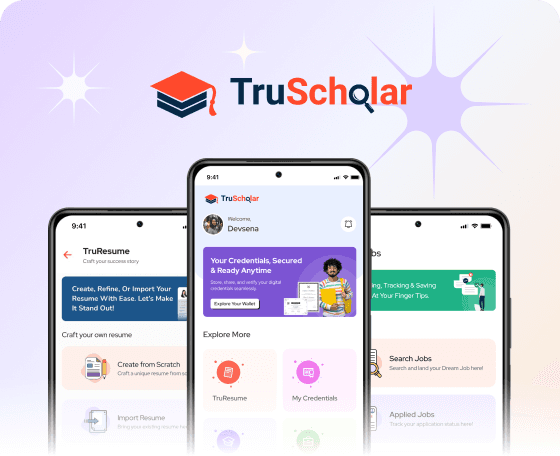
Unlock Your Career With the TruScholar AI Career Coach
Download The App Now


Issue Digital Credetials, Certificate, marksheet instant with Secure Blockchain Technology.
Read More Blogs
Read More Blogs
Read More Blogs
Ai career coach
Role of AI in Indian Education System
2 Mar 2026
AI career coach
AI for Career Guidance in India: How Students Can Take Benefit of AI?
27 Feb 2026
Ai Career coach
How AI Can Fix Learning Gaps in Indian Education
27 Feb 2026
Ai career coach
AI Skills Indian Students Must Learn for Future Jobs
26 Feb 2026
Ai career coach
The Impact of Artificial Intelligence on Education in India
25 Feb 2026
Ai career coach
The Role of AI in Education and Learning
24 Feb 2026
Ai career coach
Role of AI in Indian Education System
2 Mar 2026
AI career coach
AI for Career Guidance in India: How Students Can Take Benefit of AI?
27 Feb 2026
Ai Career coach
How AI Can Fix Learning Gaps in Indian Education
27 Feb 2026
Ai career coach
AI Skills Indian Students Must Learn for Future Jobs
26 Feb 2026
Ai career coach
Role of AI in Indian Education System
2 Mar 2026
AI career coach
AI for Career Guidance in India: How Students Can Take Benefit of AI?
27 Feb 2026
Ai Career coach
How AI Can Fix Learning Gaps in Indian Education
27 Feb 2026
Ai career coach
AI Skills Indian Students Must Learn for Future Jobs
26 Feb 2026