Digital Certificates
Digital Certificates
Digital Certificates
How Universities Can Digitize Their Certificate Issuance Process
How Universities Can Digitize Their Certificate Issuance Process
How Universities Can Digitize Their Certificate Issuance Process
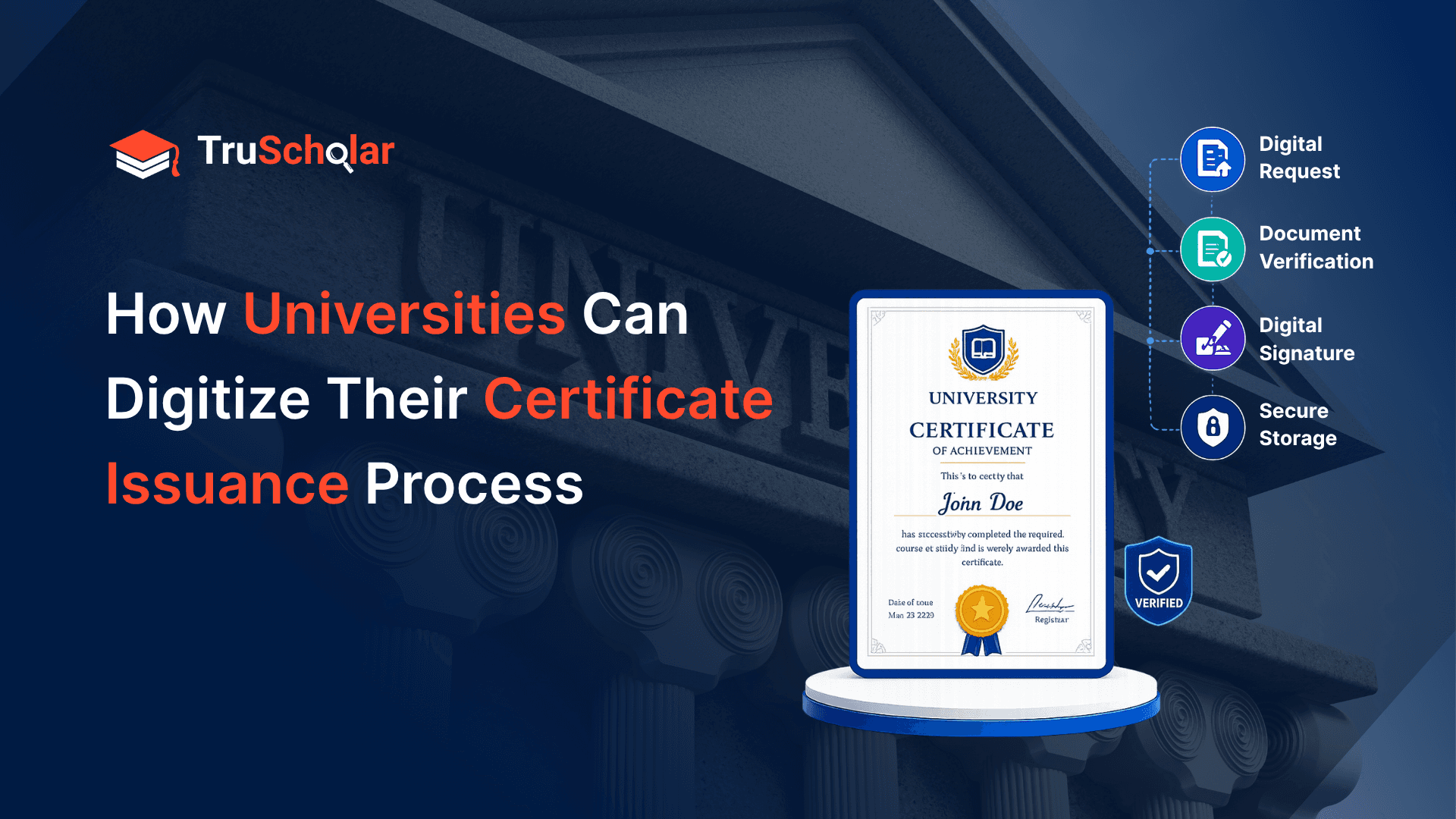
Universities worldwide are embracing digital transformation to improve operations and student services. Digitizing the certificate for universities has become a priority as institutions seek faster, more secure, and efficient ways to issue, manage, and verify academic credentials in an increasingly digital environment.
Why Traditional Certificate Issuance Is No Longer Sustainable
For many years, universities have relied on paper-based certificates to recognize academic achievements. While this method has served institutions well, it presents several challenges in today's fast-paced and technology-driven world.
Printing, signing, storing, and distributing physical certificates requires significant administrative effort and financial resources. Additionally, students often face delays in receiving credentials, while employers may encounter difficulties when attempting to verify academic records.
The increasing risk of certificate fraud has further highlighted the need for more secure credential management systems. As a result, digitizing the certificate for universities is becoming an essential step toward modernizing academic credentialing processes.
What Does Certificate Digitization Mean?
Certificate digitization refers to the process of creating, issuing, storing, and managing academic credentials electronically. Instead of producing paper certificates, universities generate secure digital credentials that can be accessed, shared, and verified online.
Digital certificates contain the same academic information as traditional documents but offer additional advantages such as instant accessibility, secure storage, and simplified verification.
Many institutions are now adopting digital credential platforms that allow students, employers, and universities to interact with academic records more efficiently and securely.
Key Benefits of Digitizing the Certificate for Universities
The shift from paper-based certificates to digital credentials provides significant advantages for educational institutions, students, and employers alike.
Some of the most important benefits include:
Digital certificate issuance significantly reduces administrative workloads by automating credential creation, distribution, and management processes. University staff spend less time handling paperwork and more time focusing on academic and student support activities.
Secure digital credentials help prevent certificate fraud by incorporating advanced verification features and tamper-resistant technologies. This strengthens trust in university-issued qualifications while protecting institutional reputation and academic integrity.
Students gain instant access to their credentials without waiting for physical delivery. This convenience improves the overall student experience while enabling graduates to share qualifications quickly during job applications and admissions processes.
Digital records eliminate many printing, storage, and courier expenses associated with traditional certificate issuance. Universities can reduce operational costs while supporting environmentally sustainable practices through paperless credential management.
Online verification capabilities allow employers and third parties to validate credentials immediately. Faster verification processes improve recruitment efficiency and reduce the burden on university administrative departments.
Centralized digital systems improve record management and data accessibility. Universities can securely maintain credential histories while ensuring that authorized users can access information whenever required.
Steps Universities Can Take to Digitize Certificate Issuance
Successfully implementing a digital credentialing system requires careful planning and the right technological infrastructure.
Universities can follow several important steps to modernize their certificate issuance processes:
Evaluate Existing Credential Management Processes
The first step is assessing current certificate workflows to identify inefficiencies and opportunities for improvement. Understanding existing challenges helps institutions select solutions that align with their operational goals and student needs.
Select a Secure Digital Credential Platform
Choosing the right platform is critical for successful implementation. Universities should prioritize solutions that offer secure issuance, verification capabilities, scalability, and seamless integration with existing academic systems.
Automate Credential Issuance
Automation reduces manual work and minimizes the risk of human error. Universities can establish workflows that automatically generate and distribute credentials once academic requirements are successfully completed.
Enable Instant Verification
Verification features should allow employers, institutions, and other stakeholders to confirm credential authenticity quickly and securely. This increases trust while simplifying the verification process for all parties involved.
Educate Students and Stakeholders
Successful adoption depends on awareness and understanding. Universities should provide guidance on how students can access, manage, and share digital credentials effectively.
Monitor and Improve the System
Regular evaluation helps institutions identify areas for optimization and ensure that the credentialing system continues to meet evolving academic and industry requirements.
How TruScholar Helps Universities Digitize Certificate Issuance
As universities move toward digital transformation, choosing the right technology partner becomes increasingly important. TruScholar provides a comprehensive platform designed to simplify and strengthen the digital credentialing process.
TruScholar helps institutions accelerate digitizing the certificate for universities through several powerful capabilities:
TruScholar enables universities to issue secure digital certificates, transcripts, badges, and academic credentials through a centralized platform. This streamlines credential management while reducing the administrative burden associated with traditional issuance methods.
Advanced verification mechanisms allow employers and third parties to validate credentials instantly. This improves trust in academic records and eliminates lengthy manual verification procedures commonly experienced by universities.
The platform supports tamper-proof digital credentials that help institutions combat certificate fraud. Enhanced security features protect the credibility of university-issued qualifications and strengthen institutional reputation.
Automated issuance workflows reduce processing time and improve operational efficiency. Universities can distribute credentials at scale while maintaining accuracy and consistency across all issued records.
Students can access, store, and share their credentials digitally from anywhere. This improves convenience while helping graduates showcase their achievements during employment and higher education opportunities.
TruScholar's scalable infrastructure supports institutions of varying sizes, making it suitable for universities seeking long-term digital transformation and modern credential management solutions.
Challenges Universities May Face During Digital Transformation
Although the benefits are significant, implementing digital credential systems can present certain challenges. Universities may need to address technology integration requirements, stakeholder training, and process adaptation.
Data security and privacy considerations also require careful attention to ensure compliance with institutional policies and regulatory standards.
However, with proper planning and support from trusted digital credential providers, these challenges can be effectively managed while maximizing long-term benefits.
Conclusion
The future of academic credentialing is increasingly digital. Digitizing the certificate for universities helps institutions improve efficiency, reduce costs, strengthen security, and enhance student experiences. By adopting modern credential management solutions and partnering with platforms like TruScholar, universities can streamline certificate issuance while ensuring that academic achievements remain secure, verifiable, and easily accessible in today's digital world.
Universities worldwide are embracing digital transformation to improve operations and student services. Digitizing the certificate for universities has become a priority as institutions seek faster, more secure, and efficient ways to issue, manage, and verify academic credentials in an increasingly digital environment.
Why Traditional Certificate Issuance Is No Longer Sustainable
For many years, universities have relied on paper-based certificates to recognize academic achievements. While this method has served institutions well, it presents several challenges in today's fast-paced and technology-driven world.
Printing, signing, storing, and distributing physical certificates requires significant administrative effort and financial resources. Additionally, students often face delays in receiving credentials, while employers may encounter difficulties when attempting to verify academic records.
The increasing risk of certificate fraud has further highlighted the need for more secure credential management systems. As a result, digitizing the certificate for universities is becoming an essential step toward modernizing academic credentialing processes.
What Does Certificate Digitization Mean?
Certificate digitization refers to the process of creating, issuing, storing, and managing academic credentials electronically. Instead of producing paper certificates, universities generate secure digital credentials that can be accessed, shared, and verified online.
Digital certificates contain the same academic information as traditional documents but offer additional advantages such as instant accessibility, secure storage, and simplified verification.
Many institutions are now adopting digital credential platforms that allow students, employers, and universities to interact with academic records more efficiently and securely.
Key Benefits of Digitizing the Certificate for Universities
The shift from paper-based certificates to digital credentials provides significant advantages for educational institutions, students, and employers alike.
Some of the most important benefits include:
Digital certificate issuance significantly reduces administrative workloads by automating credential creation, distribution, and management processes. University staff spend less time handling paperwork and more time focusing on academic and student support activities.
Secure digital credentials help prevent certificate fraud by incorporating advanced verification features and tamper-resistant technologies. This strengthens trust in university-issued qualifications while protecting institutional reputation and academic integrity.
Students gain instant access to their credentials without waiting for physical delivery. This convenience improves the overall student experience while enabling graduates to share qualifications quickly during job applications and admissions processes.
Digital records eliminate many printing, storage, and courier expenses associated with traditional certificate issuance. Universities can reduce operational costs while supporting environmentally sustainable practices through paperless credential management.
Online verification capabilities allow employers and third parties to validate credentials immediately. Faster verification processes improve recruitment efficiency and reduce the burden on university administrative departments.
Centralized digital systems improve record management and data accessibility. Universities can securely maintain credential histories while ensuring that authorized users can access information whenever required.
Steps Universities Can Take to Digitize Certificate Issuance
Successfully implementing a digital credentialing system requires careful planning and the right technological infrastructure.
Universities can follow several important steps to modernize their certificate issuance processes:
Evaluate Existing Credential Management Processes
The first step is assessing current certificate workflows to identify inefficiencies and opportunities for improvement. Understanding existing challenges helps institutions select solutions that align with their operational goals and student needs.
Select a Secure Digital Credential Platform
Choosing the right platform is critical for successful implementation. Universities should prioritize solutions that offer secure issuance, verification capabilities, scalability, and seamless integration with existing academic systems.
Automate Credential Issuance
Automation reduces manual work and minimizes the risk of human error. Universities can establish workflows that automatically generate and distribute credentials once academic requirements are successfully completed.
Enable Instant Verification
Verification features should allow employers, institutions, and other stakeholders to confirm credential authenticity quickly and securely. This increases trust while simplifying the verification process for all parties involved.
Educate Students and Stakeholders
Successful adoption depends on awareness and understanding. Universities should provide guidance on how students can access, manage, and share digital credentials effectively.
Monitor and Improve the System
Regular evaluation helps institutions identify areas for optimization and ensure that the credentialing system continues to meet evolving academic and industry requirements.
How TruScholar Helps Universities Digitize Certificate Issuance
As universities move toward digital transformation, choosing the right technology partner becomes increasingly important. TruScholar provides a comprehensive platform designed to simplify and strengthen the digital credentialing process.
TruScholar helps institutions accelerate digitizing the certificate for universities through several powerful capabilities:
TruScholar enables universities to issue secure digital certificates, transcripts, badges, and academic credentials through a centralized platform. This streamlines credential management while reducing the administrative burden associated with traditional issuance methods.
Advanced verification mechanisms allow employers and third parties to validate credentials instantly. This improves trust in academic records and eliminates lengthy manual verification procedures commonly experienced by universities.
The platform supports tamper-proof digital credentials that help institutions combat certificate fraud. Enhanced security features protect the credibility of university-issued qualifications and strengthen institutional reputation.
Automated issuance workflows reduce processing time and improve operational efficiency. Universities can distribute credentials at scale while maintaining accuracy and consistency across all issued records.
Students can access, store, and share their credentials digitally from anywhere. This improves convenience while helping graduates showcase their achievements during employment and higher education opportunities.
TruScholar's scalable infrastructure supports institutions of varying sizes, making it suitable for universities seeking long-term digital transformation and modern credential management solutions.
Challenges Universities May Face During Digital Transformation
Although the benefits are significant, implementing digital credential systems can present certain challenges. Universities may need to address technology integration requirements, stakeholder training, and process adaptation.
Data security and privacy considerations also require careful attention to ensure compliance with institutional policies and regulatory standards.
However, with proper planning and support from trusted digital credential providers, these challenges can be effectively managed while maximizing long-term benefits.
Conclusion
The future of academic credentialing is increasingly digital. Digitizing the certificate for universities helps institutions improve efficiency, reduce costs, strengthen security, and enhance student experiences. By adopting modern credential management solutions and partnering with platforms like TruScholar, universities can streamline certificate issuance while ensuring that academic achievements remain secure, verifiable, and easily accessible in today's digital world.

Unlock Your Career With the TruScholar AI Career Coach
Download The App Now



Issue Digital Credetials, Certificate, marksheet instant with Secure Blockchain Technology.
Read More Blogs
Read More Blogs
Read More Blogs

AI
How AI Is Reshaping Early Careers: Employer & Graduate Perspectives
AI
Career Planning with AI: ChatGPT and Beyond

Digital Badges
How to Use Digital Badges and Microcredentials in Career Portfolios
Digital Credentials
How Digital Credentials Improve Student Employability
AI
How AI Improves Communication Skills for Interviews

AI
Future of Career Guidance: How AI Is Changing Student Careers