Blockchain
Blockchain
Blockchain
How Blockchain-Based Digital Certificates Prevent Fake Degrees
How Blockchain-Based Digital Certificates Prevent Fake Degrees
How Blockchain-Based Digital Certificates Prevent Fake Degrees
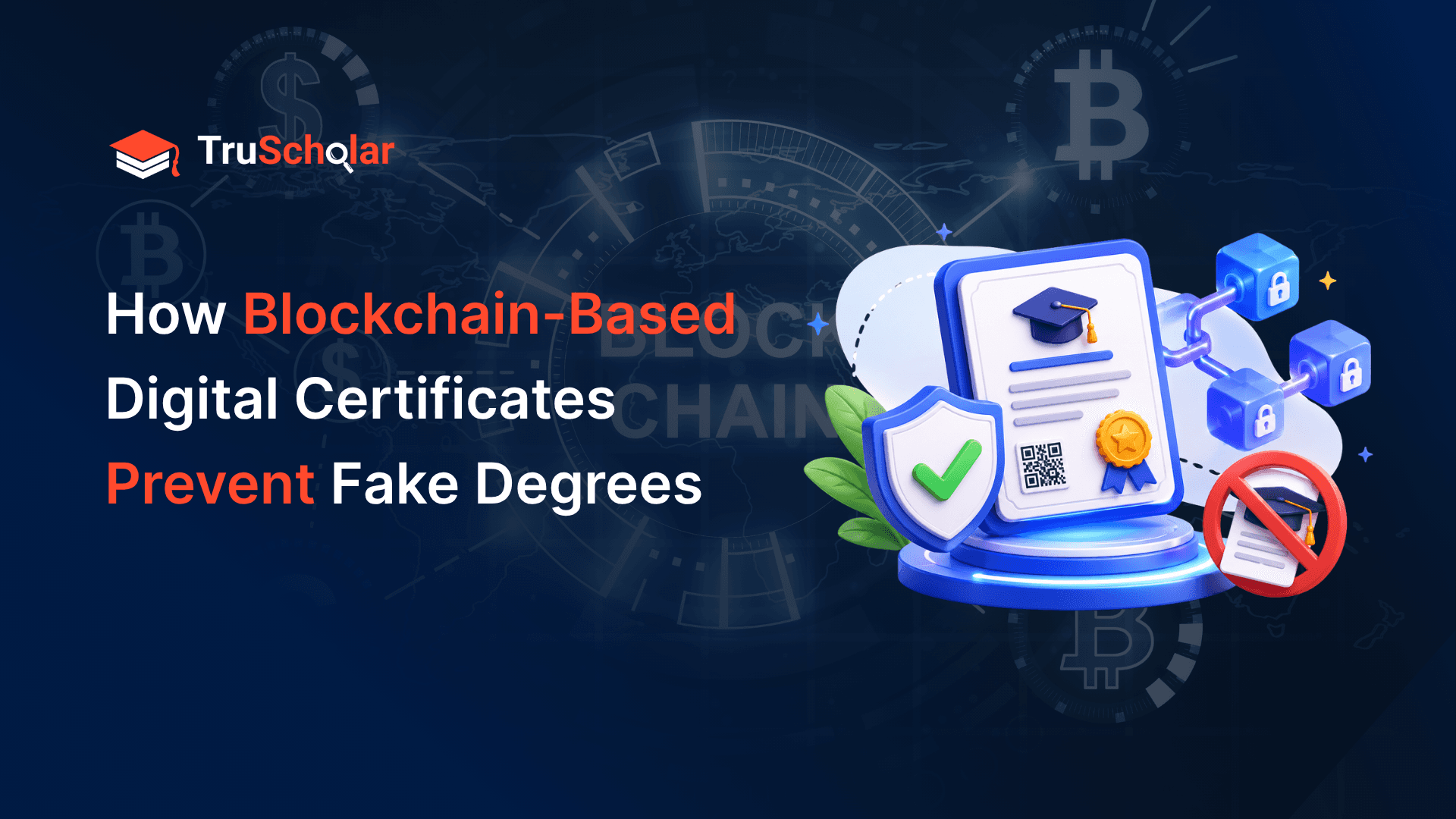
The growing number of fake degrees and forged academic documents has become a major concern for educational institutions and employers worldwide. Blockchain based digital certificates offer a secure and reliable solution that helps organizations verify credentials instantly while preventing fraud and document tampering.
The Rising Problem of Fake Degrees
Academic fraud has increased significantly in recent years as counterfeit certificates become easier to create using advanced design tools and online services. Many employers struggle to verify the authenticity of educational credentials, especially when applicants come from different countries or institutions.
Traditional paper certificates can be altered, duplicated, or completely fabricated. Even digitally stored documents may be vulnerable to manipulation if they rely on centralized databases that can be compromised. As a result, organizations need a more secure and transparent way to validate educational achievements.
This challenge has led institutions to explore blockchain based digital certificates as a modern alternative to conventional credential management systems.
What Are Blockchain Based Digital Certificates?
Blockchain based digital certificates are academic credentials issued and stored using blockchain technology. Instead of relying solely on physical documents or centralized databases, certificate information is securely recorded on a decentralized ledger.
Each certificate receives a unique digital identity that cannot be modified once it is added to the blockchain. This creates a permanent and tamper-proof record of a student's achievement.
When graduates share their credentials with employers, recruiters can instantly verify the authenticity of the certificate without contacting the issuing institution. This reduces verification delays while increasing trust in the credential.
How Blockchain Technology Prevents Certificate Fraud
The strength of blockchain technology lies in its ability to create secure and immutable records. Once certificate data is recorded on the blockchain, it cannot be altered without network-wide validation.
Several features make blockchain based digital certificates highly effective against fraud:
Every certificate is assigned a unique cryptographic identifier that creates a permanent digital fingerprint. Any attempt to modify the original record immediately creates inconsistencies, making unauthorized changes easy to detect and preventing fraudulent credential manipulation.
Blockchain networks operate through distributed record keeping rather than depending on a single database. Because information exists across multiple nodes simultaneously, attackers cannot easily alter or delete certificate records without affecting the entire network.
Verification occurs directly against blockchain records in real time, allowing employers and institutions to confirm authenticity within seconds. This process removes dependence on manual verification methods that often consume significant administrative resources and time.
Digital certificates issued through blockchain platforms include timestamped records that clearly show when credentials were awarded. This creates an accurate historical record that helps eliminate disputes regarding certificate issuance and validity.
The decentralized nature of blockchain reduces the risk of data breaches commonly associated with centralized storage systems. Even if one system experiences technical issues, the credential records remain securely accessible across the network.
Students gain greater ownership and control over their credentials because certificates can be securely shared through digital wallets or verification links. This reduces the likelihood of document loss while simplifying the credential-sharing process.
Benefits for Educational Institutions
Educational institutions face increasing pressure to maintain the integrity of their credentials. Blockchain based digital certificates help institutions strengthen their reputation while improving operational efficiency.
By automating verification processes, universities and colleges can significantly reduce administrative workloads. Staff members spend less time responding to verification requests and more time focusing on educational priorities.
Institutions also benefit from enhanced security because blockchain records are resistant to unauthorized modifications. This protects the value of their credentials and helps maintain trust among employers, students, and academic partners.
Furthermore, digital certificate issuance reduces printing, storage, and distribution costs associated with traditional paper-based systems.
Benefits for Employers and Recruiters
Recruiters often encounter challenges when verifying academic qualifications during the hiring process. Delays in credential verification can slow recruitment and create uncertainty regarding candidate qualifications.
Blockchain based digital certificates provide a faster and more reliable solution. Employers can verify credentials instantly using secure digital verification tools, reducing the need for extensive background checks.
Key advantages for employers include:
Faster verification processes help recruitment teams make hiring decisions more efficiently. Instead of waiting days or weeks for confirmation from educational institutions, employers can access verified credential information almost immediately through blockchain-based systems.
Greater confidence in candidate qualifications reduces the risk of hiring individuals who present fraudulent academic records. Verified credentials provide clear evidence that educational achievements have been legitimately earned from recognized institutions.
Reduced administrative costs result from eliminating many manual verification activities. Human resources teams can streamline credential checks while maintaining high standards of accuracy and compliance throughout the recruitment process.
Improved transparency allows recruiters to review authentic academic histories directly from trusted blockchain records. This minimizes uncertainty and supports more informed hiring decisions based on verified information.
Enhanced global accessibility makes it easier to verify qualifications from international institutions. Employers can evaluate candidates from different regions without facing complex cross-border verification challenges or communication delays.
Secure digital records help organizations maintain reliable audit trails for compliance purposes. Verified credentials remain accessible whenever needed for internal reviews, regulatory requirements, or future employment assessments.
The Future of Credential Verification
As digital transformation continues across education and employment sectors, the demand for secure credential verification will continue to grow. More institutions are recognizing the value of blockchain technology in protecting academic records and improving trust in educational qualifications.
Governments, universities, certification providers, and employers are increasingly adopting blockchain-based solutions to address credential fraud. This shift is expected to create a more transparent and efficient verification ecosystem worldwide.
The widespread adoption of blockchain based digital certificates could eventually establish a global standard for credential verification, making fake degrees significantly harder to create and distribute.
Conclusion
Fake degrees present serious risks for educational institutions, employers, and students alike. Blockchain based digital certificates offer a powerful solution by creating secure, tamper-proof, and instantly verifiable academic records. As organizations continue to prioritize trust and transparency, blockchain based digital certificates are becoming an essential tool for protecting the credibility of educational credentials and preventing academic fraud.
The growing number of fake degrees and forged academic documents has become a major concern for educational institutions and employers worldwide. Blockchain based digital certificates offer a secure and reliable solution that helps organizations verify credentials instantly while preventing fraud and document tampering.
The Rising Problem of Fake Degrees
Academic fraud has increased significantly in recent years as counterfeit certificates become easier to create using advanced design tools and online services. Many employers struggle to verify the authenticity of educational credentials, especially when applicants come from different countries or institutions.
Traditional paper certificates can be altered, duplicated, or completely fabricated. Even digitally stored documents may be vulnerable to manipulation if they rely on centralized databases that can be compromised. As a result, organizations need a more secure and transparent way to validate educational achievements.
This challenge has led institutions to explore blockchain based digital certificates as a modern alternative to conventional credential management systems.
What Are Blockchain Based Digital Certificates?
Blockchain based digital certificates are academic credentials issued and stored using blockchain technology. Instead of relying solely on physical documents or centralized databases, certificate information is securely recorded on a decentralized ledger.
Each certificate receives a unique digital identity that cannot be modified once it is added to the blockchain. This creates a permanent and tamper-proof record of a student's achievement.
When graduates share their credentials with employers, recruiters can instantly verify the authenticity of the certificate without contacting the issuing institution. This reduces verification delays while increasing trust in the credential.
How Blockchain Technology Prevents Certificate Fraud
The strength of blockchain technology lies in its ability to create secure and immutable records. Once certificate data is recorded on the blockchain, it cannot be altered without network-wide validation.
Several features make blockchain based digital certificates highly effective against fraud:
Every certificate is assigned a unique cryptographic identifier that creates a permanent digital fingerprint. Any attempt to modify the original record immediately creates inconsistencies, making unauthorized changes easy to detect and preventing fraudulent credential manipulation.
Blockchain networks operate through distributed record keeping rather than depending on a single database. Because information exists across multiple nodes simultaneously, attackers cannot easily alter or delete certificate records without affecting the entire network.
Verification occurs directly against blockchain records in real time, allowing employers and institutions to confirm authenticity within seconds. This process removes dependence on manual verification methods that often consume significant administrative resources and time.
Digital certificates issued through blockchain platforms include timestamped records that clearly show when credentials were awarded. This creates an accurate historical record that helps eliminate disputes regarding certificate issuance and validity.
The decentralized nature of blockchain reduces the risk of data breaches commonly associated with centralized storage systems. Even if one system experiences technical issues, the credential records remain securely accessible across the network.
Students gain greater ownership and control over their credentials because certificates can be securely shared through digital wallets or verification links. This reduces the likelihood of document loss while simplifying the credential-sharing process.
Benefits for Educational Institutions
Educational institutions face increasing pressure to maintain the integrity of their credentials. Blockchain based digital certificates help institutions strengthen their reputation while improving operational efficiency.
By automating verification processes, universities and colleges can significantly reduce administrative workloads. Staff members spend less time responding to verification requests and more time focusing on educational priorities.
Institutions also benefit from enhanced security because blockchain records are resistant to unauthorized modifications. This protects the value of their credentials and helps maintain trust among employers, students, and academic partners.
Furthermore, digital certificate issuance reduces printing, storage, and distribution costs associated with traditional paper-based systems.
Benefits for Employers and Recruiters
Recruiters often encounter challenges when verifying academic qualifications during the hiring process. Delays in credential verification can slow recruitment and create uncertainty regarding candidate qualifications.
Blockchain based digital certificates provide a faster and more reliable solution. Employers can verify credentials instantly using secure digital verification tools, reducing the need for extensive background checks.
Key advantages for employers include:
Faster verification processes help recruitment teams make hiring decisions more efficiently. Instead of waiting days or weeks for confirmation from educational institutions, employers can access verified credential information almost immediately through blockchain-based systems.
Greater confidence in candidate qualifications reduces the risk of hiring individuals who present fraudulent academic records. Verified credentials provide clear evidence that educational achievements have been legitimately earned from recognized institutions.
Reduced administrative costs result from eliminating many manual verification activities. Human resources teams can streamline credential checks while maintaining high standards of accuracy and compliance throughout the recruitment process.
Improved transparency allows recruiters to review authentic academic histories directly from trusted blockchain records. This minimizes uncertainty and supports more informed hiring decisions based on verified information.
Enhanced global accessibility makes it easier to verify qualifications from international institutions. Employers can evaluate candidates from different regions without facing complex cross-border verification challenges or communication delays.
Secure digital records help organizations maintain reliable audit trails for compliance purposes. Verified credentials remain accessible whenever needed for internal reviews, regulatory requirements, or future employment assessments.
The Future of Credential Verification
As digital transformation continues across education and employment sectors, the demand for secure credential verification will continue to grow. More institutions are recognizing the value of blockchain technology in protecting academic records and improving trust in educational qualifications.
Governments, universities, certification providers, and employers are increasingly adopting blockchain-based solutions to address credential fraud. This shift is expected to create a more transparent and efficient verification ecosystem worldwide.
The widespread adoption of blockchain based digital certificates could eventually establish a global standard for credential verification, making fake degrees significantly harder to create and distribute.
Conclusion
Fake degrees present serious risks for educational institutions, employers, and students alike. Blockchain based digital certificates offer a powerful solution by creating secure, tamper-proof, and instantly verifiable academic records. As organizations continue to prioritize trust and transparency, blockchain based digital certificates are becoming an essential tool for protecting the credibility of educational credentials and preventing academic fraud.