Digital Credentials
Digital Credentials
Digital Credentials
Helping Filipino Graduates Share Qualifications for Overseas Applications
Helping Filipino Graduates Share Qualifications for Overseas Applications
Helping Filipino Graduates Share Qualifications for Overseas Applications
By
Ritika Jakhotiya

In today's globalised economy, there is a constant exchange of talent, skills and knowledge across countries. Filipino graduates increasingly look beyond the Philippines for higher education, scholarships and employment opportunities. Whether they are applying for a postgraduate programme in Europe or exploring job opportunities in Singapore, their academic qualifications play an important role in the application process.
But often, the scholarship or visa process becomes the first obstacle. Graduates need to gather several documents, submit them within deadlines and ensure that their qualifications can be verified by the receiving institution. Scattered records, missing certificates and delays in official verification can put Filipino applicants at a disadvantage. A delay in submitting the required documents may even affect their admission or job opportunity.
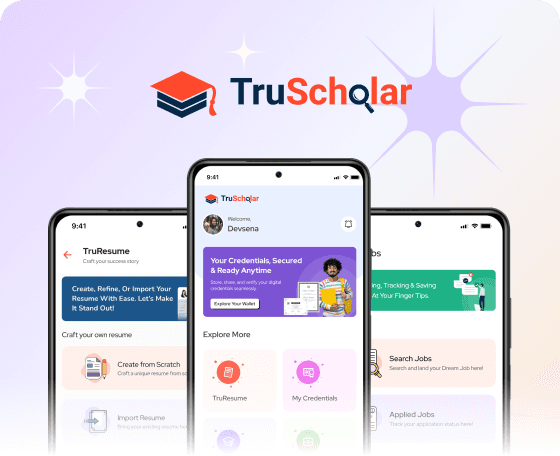
When universities issue credentials through TruScholar, these can be delivered directly to students’ learner wallets. With their verifiable mga kredensyal (credentials) accessible in one app, graduates can organise their academic records and share the relevant documents more conveniently. This can make the overseas application process easier to manage, both for mga nagtapos (graduates) and the institutions receiving their applications.
Organised Records in One App
More often than not, academic credentials are scattered across different places. Some are stored in physical files, while others are buried in email attachments received years ago. A graduate may have their diploma in one folder, Transcript of Records in another, and internship or participation certificates saved on an old phone.
When these documents are required for an overseas application, finding and bringing them all together becomes a task in itself. It also increases the chances of documents getting misplaced. If a certificate is missing, graduates may have to contact their university and request a duplicate.
This process can take time. University staff may need to search through archived records, check the graduate’s details and prepare the requested document. If the application deadline is approaching, even a small delay can create unnecessary stress.
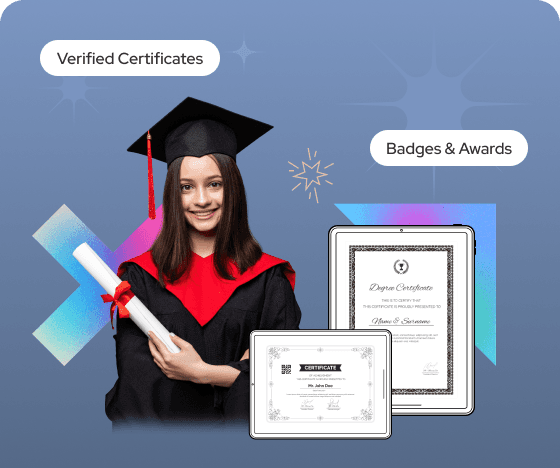
Digital credential issuance, combined with a learner wallet, can help bring these records together. When Philippine universities issue digital mga sertipiko (certificates) through TruScholar, they can be delivered directly to students’ learner wallets. Graduates can then search for their available credentials in the app and access them whenever required.
For example, a student applying for a master’s programme abroad may need their degree certificate, transcript of records and additional course certificates. Instead of searching through old email conversations or contacting different university departments, they can access the credentials issued to their wallet and share the relevant ones with the receiving institution. Even when they change their phones, logging in with the same details will give them access to all the issued mga kredensyal.
Credentials can be shared through secure verification links. The recipient can open the link to view the credential and its available verification details on the university’s domain. Where a printed document is required, graduates can download and print the PDF. The QR code on the printed certificate can lead to the same verification page.
This is particularly useful when graduates apply abroad several years after completing their studies. Their academic journey may have taken place long ago, but they can still access the digital credentials issued to their wallet without having to search through old files.
The wallet does not automatically collect every document a graduate has ever earned. Its contents depend on the credentials issued by participating institutions and the available processes for adding other records. However, it provides a convenient central place for learners to access the credentials made available to them.
Verification of Credentials
A Filipino graduate has organised their academic records and shared the relevant credentials with an overseas university, employer or other recipient. The next step is making sure that the qualifications presented are genuine.
Traditionally, the recipient may need to contact the issuing university through email or phone. University staff then check the graduate’s records and respond with the necessary confirmation. When several applications are being processed at once, these requests can add to the administrative workload and take time.
With verifiable digital credentials, routine checks can become more straightforward. When a graduate shares a digital credential link, the recipient can open it to view the available information. If the graduate submits a printed certificate, the recipient can scan its QR code using a phone camera. The verification page can display details such as the learner’s name, qualification, issuing institution, issue date and current credential status. If scanning is not convenient, the recipient can type the verification link printed alongside the QR code. Both options lead to the same verification record.
This allows an employer or university admissions team to check the credential information without depending entirely on email exchanges with the issuing institution. The QR code and verification link also make it easier to access the record when a graduate shares a document digitally or in printed form.
For example, a Filipino graduate applying for a job overseas may share their diploma and Transcript of Records with the employer. The recipient can check the available verification records to confirm that the qualifications were issued by the university.
This can save time for graduates and receiving organisations. It also helps universities respond to fewer routine verification requests, allowing their administrative teams to focus on other responsibilities.
However, a digital verification page confirms the information made available by the issuing institution through its credential system. It does not automatically satisfy every receiving organisation’s requirements for academic evaluation, official authentication or document legalisation.
Distinction from Official Authentication
The Philippines already has an official digital service for academic record certification, authentication and verification through the Commission on Higher Education’s (CHED) eCAV.
eCAV provides an official process for applicants who need their higher education academic records certified, authenticated or verified. Applicants can submit the required information, track their application and obtain the relevant output through the system. Its verification facility also allows recipients to check an eCAV application using the required reference details.
Where does an institutional digital credential platform fit into this process?
TruScholar’s features, from digital issuance and learner wallets to QR-based verification, complement the Philippines’ existing official arrangements. It does not aim to substitute CHED’s eCAV system or replace other government authentication requirements. Instead, it gives universities another way to issue and manage credentials while making routine access and verification easier for graduates and recipients.
The distinction is mainly in their purpose and scope. eCAV supports the official government process for the academic records covered by CHED’s service. TruScholar helps institutions manage credentials from preparation and approval to issuance, delivery and verification.
For example, a university can issue a graduate’s digital diploma and transcript through TruScholar, allowing the learner to access and share those credentials through a wallet or verification link. If the receiving university, employer, embassy or other authority requires an official eCAV document, the graduate must still follow the applicable CHED process.
Similarly, some overseas applications may require additional steps, such as certified translations or other forms of authentication, depending on the destination country and the organisation receiving the documents.
A digital credential should therefore be viewed as a convenient way to access and verify information from the issuing institution, not as an automatic replacement for every official document or authentication procedure.
Universities can continue following the relevant national guidelines and the requirements of receiving organisations while using digital credentials to improve their own issuance and verification processes.
Help Make Your Graduates’ Overseas Applications Easier
Preparing for overseas education or employment involves several steps. Graduates need to identify suitable opportunities, gather academic documents, complete applications and meet submission deadlines. Universities can make one part of this journey easier by ensuring that students can access and share their academic achievements conveniently.
Digital credential issuance, combined with a learner wallet, helps graduates organise their available mga digital na kredensyal (digital credentials) in one place. They can search for the required documents, share verification links with overseas universities and employers, and download or print certificates when needed.
For Philippine universities, this also means fewer routine requests for duplicate certificates and manual verification, while giving graduates continued access to the credentials issued to them.
Want to make overseas applications easier for your graduates? Connect with TruScholar to explore how digital credential issuance and learner wallets can support your university, improve academic credential verification in the Philippines and help graduates carry their qualifications beyond graduation. Request a demo to see how it works.