Digital Credentials
Digital Credentials
Digital Credentials
Digital Certificates for Malaysian Corporate Training and Professional Development
Digital Certificates for Malaysian Corporate Training and Professional Development
Digital Certificates for Malaysian Corporate Training and Professional Development
By
Ritika Jakhotiya

Your office has more than 100 employees across different departments. Several fresh graduates and interns join the organisation every year. Your HR team and department leaders are already handling a long list of responsibilities: arranging induction sessions, organising training programmes, conducting regular seminars and webinars, and keeping track of employee performance.
Alongside these activities, they also need to issue certificates. From participation certificates for event attendees to training completion certificates and professional qualifications, managing all these documents across different platforms can become stressful, especially when they need to be generated in bulk.
Digital credential issuance systems can streamline this process and reduce repetitive administrative work for HR teams and department leaders. From surat pelantikan (appointment letters) and letters of recommendation (LORs) to sijil latihan (training certificates) and experience letters, a digital credential platform can help organisations generate, manage and distribute different types of employee documents.
It also gives employees a convenient way to access their achievements throughout their professional journey, instead of searching through old emails or requesting copies from HR whenever they need them.
Bulk Issuance
There is a major corporate event at your office, with around 300 attendees. The HR team needs to issue sijil penyertaan (participation certificates) to attendees, certificates to the organising team and surat penghargaan (letters of appreciation) to the speakers. Manually preparing three different templates and entering details into every certificate or letter can be an overwhelming task.
Digital credential issuance can help simplify this process. Before the event, HR can design separate certificate templates for different roles using the software. The templates can include the organisation’s logo, colours, authorised signatures and other relevant details. Once the event is over, the team can simply upload the attendance spreadsheet. The software can populate the templates with the relevant employee or participant information and generate certificates in bulk.
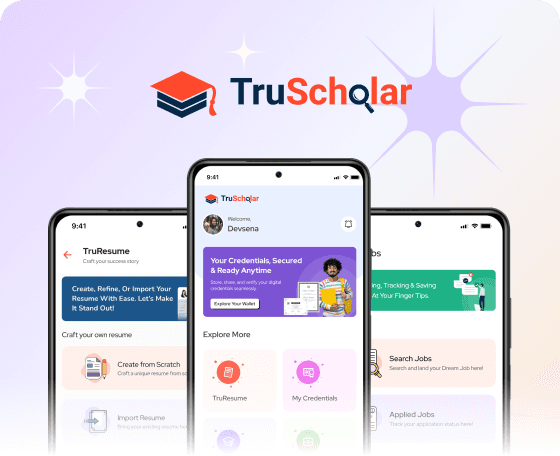
The generated credentials can then be shared through links sent by email or SMS, or delivered directly to employees’ learner wallets when issued through TruScholar. Employees can also download PDF copies whenever they need them.
The same process can be followed for induction programmes, departmental training, seminars, webinars and other corporate learning activities. Instead of preparing each certificate individually, HR can upload a spreadsheet or connect the platform with existing systems such as an HRMS, LMS or other internal software, depending on the available integration.
For organisations that conduct regular training sessions, this can save considerable time. HR teams can focus on planning the next programme rather than spending hours preparing certificates for the previous one.
Bulk issuance also helps maintain consistency. When every certificate is generated using an approved template, organisations can ensure that employee details, programme names and institutional branding follow a standard format.
Approval Workflows in Corporate Offices
When an intern or employee takes up a training course in a corporate office, there may be several steps before the organisation recognises its completion. Depending on company policies, the process could include an assessment, observation by the trainer, feedback from the team leader and an evaluation by HR to understand how the training has influenced work performance. Only after these steps are completed may the employee receive a training completion certificate.
A similar approval process can be established for digital certificates, with role-based access. One person can prepare or generate the certificate, another can review the details, and an authorised official can approve it with a signature before release.
For example, a department manager may confirm that an employee has completed the required training hours. The HR team can then review the employee’s details and programme information, while the designated approver gives the final approval.
This helps ensure that certificates are not issued before the necessary checks are completed. It also reduces the chances of errors in employee names, course titles, completion dates or other important details.
Role-based access is particularly useful in larger organisations where different departments conduct their own training programmes. Not every staff member needs permission to approve or issue credentials. Assigning responsibilities clearly helps maintain accountability and keeps the issuance process organised.
Once approved, employees can receive their sijil through email or SMS, as well as in their learner wallet when the organisation uses TruScholar. This gives them a convenient way to access their certificates without having to contact HR every time they need a copy.
Managing Professional Certifications and Renewals
Not every training certificate has the same purpose or validity period. A certificate for attending a one-day seminar may simply recognise participation, while a professional certification or workplace safety qualification may have specific renewal requirements.
For organisations, keeping track of such differences is important. An employee may have completed a course several years ago, but the certificate may need renewal before it can be used to demonstrate current competency.
For example, an employee working in a technical or safety-related role may need to complete periodic refresher training or reassessment, depending on the applicable certification requirements. If HR relies only on an old certificate stored in a folder, it may be difficult to know whether the qualification is still current.
Digital credential management can help organisations maintain clearer records of issued credentials and their applicable status. Where an expiry date or renewal period applies, the relevant information can be included in the credential record. Depending on the platform’s configuration and the issuer’s policies, the status may be updated when a credential expires, is renewed, corrected or revoked.
This is particularly useful for organisations that manage employees across different departments, locations and job roles. HR teams can refer to credential records when reviewing training histories and identifying employees who may need further training.
However, not every certificate should have an expiry date. A participation certificate or a record of completing a particular workshop may remain a historical record of that achievement. Renewal rules should be applied only where they are relevant to the programme or certification.
Employee Access to Training and Professional Credentials
An employee may complete several training programmes during their time with an organisation. These could include onboarding, workplace safety, communication skills, leadership development, technical training and department-specific workshops.
Over time, these achievements can become difficult to track. Some certificates may be stored in email attachments, others in shared folders, while printed copies may be kept in files that employees rarely revisit.
A digital credential wallet provides a central place for employees to access credentials issued through the platform. Instead of searching across different locations, they can view their available sijil latihan, participation certificates and other professional achievements in one place.
This is useful when an employee applies for an internal promotion, moves to another department or looks for opportunities outside the organisation. They can retrieve relevant certificates and share them with the concerned person when required.
For instance, an employee applying for a team leader position may want to share certificates from leadership workshops, communication training and previous professional development programmes. Someone moving into a technical role may choose to present their relevant software or equipment training credentials.
The wallet can also make it easier for employees to maintain a record of their learning beyond their current workplace. Their professional development does not necessarily end when they leave an organisation. They may continue adding credentials issued by other participating institutions and organisations, building a broader record of their skills and achievements over time.
Supporting Lifelong Learning
Professional development is not a one-time activity. Employees continue learning as their roles change, new technologies emerge and workplace requirements evolve. This is the idea behind pembelajaran sepanjang hayat (lifelong learning).
For organisations, encouraging continuous learning can help employees develop new skills and prepare for greater responsibilities. Recognising their progress through digital certificates can make these achievements easier to record and access.
For example, an employee may begin with an induction certificate, complete a technical training programme, attend leadership workshops and later earn a professional qualification. Each achievement can contribute to a broader record of their professional development.
Managers and HR teams can use these records as supporting information when reviewing training participation or discussing development goals. Employees, in turn, have a clearer way to demonstrate the learning they have completed.
A digital credential wallet does not replace an organisation’s HR records or performance management system. Rather, it provides employees with a convenient way to access and share the credentials issued to them.
Simplify Corporate Credential Management with TruScholar
Managing corporate training involves more than organising sessions and checking attendance. Organisations also need to recognise employee achievements, issue certificates, maintain accurate records and make sure employees can access their credentials when required.
With digital credential issuance, bulk generation, approval workflows and learner wallets, this process can become more organised. HR teams can reduce repetitive certificate preparation, while employees get a convenient place to access their sijil latihan, participation certificates and other professional achievements.
TruScholar helps organisations design, approve and issue digital credentials while maintaining their branding. Credentials can be delivered to employees through their learner wallets, with PDF downloads and QR-based verification options. This makes it easier for employees to retrieve and share their achievements, while recipients can check the available credential information through a verification link.
For Malaysian companies, training providers and professional organisations, digital training certificates offer a practical way to recognise learning and support employee development. Whether you are conducting a small departmental workshop or training hundreds of employees across different locations, a structured issuance process can save time and improve the overall experience.
Planning your next round of corporate training? Connect with TruScholar to explore how digital credential issuance can support your corporate training programmes, simplify certificate management and encourage continuous professional development. Request a demo to see how it works.