Digital Credentials
Digital Credentials
Digital Credentials
How Malaysian Employers Can Verify Learning Achievements More Efficiently
How Malaysian Employers Can Verify Learning Achievements More Efficiently
How Malaysian Employers Can Verify Learning Achievements More Efficiently
By
Ritika Jakhotiya

Your Malaysian company is hiring, and your HR team is flooded with applications. Checking each credential takes time, especially when applicants come from different universities, training institutions and professional certification bodies.
Some candidates submit digital certificates, while others provide scanned copies or physical documents. A few may even have kelayakan (qualifications) from institutions outside Malaysia. Your HR team must ensure that every credential is genuine before moving ahead with recruitment.
This is where a structured certificate verification process becomes important. Instead of checking every document manually and following up with different institutions individually, employers can establish a consistent pengesahan (verification) workflow.
But what exactly should Malaysian employers look for when verifying learning achievements, and how? Let’s break it down.
Start by Verifying the Issuing Institution
The first step in verifying any educational or professional kelayakan is checking its issuer. After all, a sijil (certificate) is only as credible as the institution or organisation that issued it.
For Malaysian employers, this means checking whether the university, college, training provider or certification body is legitimate and authorised to issue the particular qualification. For academic qualifications, employers can refer to the Malaysian Qualifications Register (MQR), maintained by the Malaysian Qualifications Agency (MQA). The register provides information about accredited programmes offered by higher education providers in Malaysia.
However, there is an important distinction here. An institution may be legitimate without every programme it offers being accredited. Similarly, accreditation status may vary depending on the programme, campus and period of delivery.
Employers should therefore verify:
The name and legal identity of the issuing institution
Whether the institution is recognised or appropriately authorised
Whether the specific programme appears in the relevant accreditation register
Whether the programme’s accreditation was valid during the candidate’s study period
Whether the qualification level and awarding authority match the information provided
For professional certifications and short-term training programmes, employers may need to check directly with the relevant certification body or training provider.
A quick Google search is not enough. An institution’s website, social media presence or professionally designed certificate does not establish that a qualification is genuine.
Check the Integrity of the Certificate

Once the issuing institution has been identified, the next step is checking the sijil itself.
Certificates today come in several formats. Some are issued digitally, while others are shared as scanned copies, photographs or printed documents. Each format presents different verification challenges. A certificate may look perfectly authentic but still contain altered information. Names, qualification titles, grades, dates and even institutional details can be manipulated.
During certificate verification, Malaysian employers can look for:
Unique certificate numbers: Does the document contain a reference number that can be traced to the issuing institution?
QR codes and verification links: Can the certificate be authenticated through an official verification portal?
Digital signatures: Does the document carry a valid digital signature or other recognised authentication mechanism?
Consistent information: Do the candidate’s name, programme title, dates and other details match across the certificate and supporting records?
Document alterations: Are there inconsistencies in formatting, fonts, logos, signatures or other visual elements?
It is also important to remember that a QR code does not automatically make a certificate genuine. Fraudulent documents can carry QR codes that lead to fake verification websites. Whenever possible, HR teams should use verification links provided through the issuer’s official website or contact the institution through independently confirmed contact details.
The idea is simple: don’t just check whether a certificate looks real. Check whether the issuer can confirm it.
Verify the Current Status of the Qualification
A candidate may have completed a kursus (course) several years ago. Another may have recently received a professional certification. Some qualifications may even require periodic renewal. This makes qualification status an important part of the verification process.
For academic achievements, majikan (employers) should establish whether the candidate has successfully completed the programme and whether the qualification has actually been awarded. For professional certifications, the verification process may need to go further.
Depending on the certification body, employers may need to check whether the credential is:
Active and currently valid
Expired
Superseded
Suspended or revoked
This distinction matters, particularly when hiring for regulated or specialised roles.
For instance, a candidate applying for a technical or professional position may hold a certificate that was valid when originally issued but is no longer active. Treating an expired credential as a current qualification could create compliance and operational risks.
Majikan should also distinguish between course completion and qualification achievement. Attending a training programme does not necessarily mean that the participant passed its final assessment or received the qualification.
When educational institutions and training providers issue certificates through TruScholar, the QR code leads to a verification page on the institution’s own domain, so employers can see that the record comes from the issuer itself. The page also displays the certificate’s current status. As long as the institution keeps its records up to date, an employer can check a qualification’s authenticity and status in one place.
Look Beyond the Certificate: Check Assessment Information
A certificate tells you that a candidate has achieved something. But does it tell you how they achieved it? Not always.
Two candidates may hold certificates with identical titles but have completed very different learning and assessment processes. One may have completed a programme involving examinations, practical assessments and project submissions. Another may have received a certificate after attending a short workshop. Both achievements may be genuine, but they should not automatically be treated as equivalent.
This is why employers should consider maklumat penilaian (assessment information) when evaluating learning achievements. Depending on the qualification, useful details may include:
The assessment methods used
Whether the candidate completed written or practical examinations
The final grade, score or competency level
The number of learning hours or programme duration
Whether workplace assessments or projects were involved
Whether the qualification required supervised examinations or practical demonstrations
For Malaysian employers, this information can help establish whether a candidate’s learning background matches the requirements of a particular role.
Consider a company hiring for a technical position. A certificate showing course completion may be useful, but knowing that the candidate also passed a practical competency assessment offers additional context.
Of course, employers do not need to request every assessment detail for every position. The level of verification should depend on the role, the importance of the qualification and the organisation’s hiring requirements.
The objective is not to make recruitment more complicated. It is to make credential evaluation more meaningful.
A Process for Unclear or Incomplete Records
Not every verification request will produce an immediate answer.
Sometimes, the issuing institution may take several days to respond. In other cases, the candidate may have submitted an incomplete certificate, an old academic transcript or a document with information that does not match the institution’s records. It is also possible that the institution has not yet updated its own records, which can affect what a digital credential shows. This is particularly common when employers are verifying qualifications from multiple institutions or countries.
Instead of treating every unclear record as a potential case of fraud, HR teams should establish a standard escalation process. A practical approach could involve three stages.
Stage 1, request additional information: If a certificate is incomplete or certain details are missing, contact the candidate and request supporting documents. These may include academic transcripts, student identification or registration numbers, additional certificate pages, and verification links or reference numbers.
Stage 2, contact the issuing institution: If the documents still cannot be verified, approach the institution directly through its official contact details or verification portal. Keep a record of the verification request, the date of contact and any response received.
Stage 3, escalate unresolved cases: If the institution does not respond or the information remains inconsistent, refer the case to the relevant HR manager, compliance team or designated verification officer.
Depending on the organisation’s policies, the candidate’s recruitment process may be placed on hold until the discrepancy is resolved.
A consistent escalation process helps employers make fairer decisions while protecting the organisation.
Make Certificate Verification More Efficient Through Digital Workflows
Manual verification may work when an organisation receives a handful of applications. But what happens when applications arrive in bulk every month? HR teams cannot spend hours contacting individual institutions, organising email responses and comparing documents manually.
This is where bulk verification through an API can make a difference. Where it is enabled, employers can check many digital credentials in one go instead of opening them one at a time.
Building a More Reliable Hiring Process
For Malaysian majikan, learning achievement verification is not simply about checking whether a certificate is genuine. It involves understanding who issued it, whether the qualification is valid, what the candidate actually achieved and whether the supporting information can be trusted.
A structured certificate verification process helps HR teams reduce repetitive work, identify inconsistencies and make better-informed recruitment decisions. It also creates a more consistent experience for candidates. When applicants know what documents are required and how their qualifications will be evaluated, the verification process becomes clearer for everyone involved.
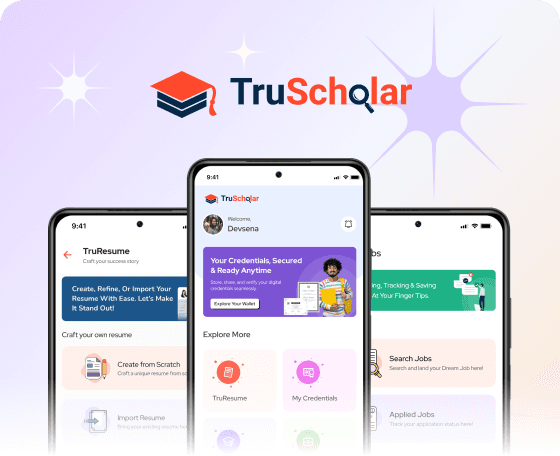
At TruScholar, we believe that verified learning achievements should be easier to access, authenticate and understand. Through digital credential verification and secure credential management, TruScholar helps organisations move towards more efficient and reliable ways of validating academic and professional achievements. Malaysian institutions and training providers can also issue digital training certificates that employers can check directly.
Want your HR team to spend less time proving certificates are real? Hiring the right candidate should be about recognising genuine skills and qualifications, not spending weeks trying to establish whether a certificate is real. Connect with TruScholar to set up digital credential verification for your hiring process.
Your Malaysian company is hiring, and your HR team is flooded with applications. Checking each credential takes time, especially when applicants come from different universities, training institutions and professional certification bodies.
Some candidates submit digital certificates, while others provide scanned copies or physical documents. A few may even have kelayakan (qualifications) from institutions outside Malaysia. Your HR team must ensure that every credential is genuine before moving ahead with recruitment.
This is where a structured certificate verification process becomes important. Instead of checking every document manually and following up with different institutions individually, employers can establish a consistent pengesahan (verification) workflow.
But what exactly should Malaysian employers look for when verifying learning achievements, and how? Let’s break it down.
Start by Verifying the Issuing Institution
The first step in verifying any educational or professional kelayakan is checking its issuer. After all, a sijil (certificate) is only as credible as the institution or organisation that issued it.
For Malaysian employers, this means checking whether the university, college, training provider or certification body is legitimate and authorised to issue the particular qualification. For academic qualifications, employers can refer to the Malaysian Qualifications Register (MQR), maintained by the Malaysian Qualifications Agency (MQA). The register provides information about accredited programmes offered by higher education providers in Malaysia.
However, there is an important distinction here. An institution may be legitimate without every programme it offers being accredited. Similarly, accreditation status may vary depending on the programme, campus and period of delivery.
Employers should therefore verify:
The name and legal identity of the issuing institution
Whether the institution is recognised or appropriately authorised
Whether the specific programme appears in the relevant accreditation register
Whether the programme’s accreditation was valid during the candidate’s study period
Whether the qualification level and awarding authority match the information provided
For professional certifications and short-term training programmes, employers may need to check directly with the relevant certification body or training provider.
A quick Google search is not enough. An institution’s website, social media presence or professionally designed certificate does not establish that a qualification is genuine.
Check the Integrity of the Certificate
Once the issuing institution has been identified, the next step is checking the sijil itself.
Certificates today come in several formats. Some are issued digitally, while others are shared as scanned copies, photographs or printed documents. Each format presents different verification challenges. A certificate may look perfectly authentic but still contain altered information. Names, qualification titles, grades, dates and even institutional details can be manipulated.
During certificate verification, Malaysian employers can look for:
Unique certificate numbers: Does the document contain a reference number that can be traced to the issuing institution?
QR codes and verification links: Can the certificate be authenticated through an official verification portal?
Digital signatures: Does the document carry a valid digital signature or other recognised authentication mechanism?
Consistent information: Do the candidate’s name, programme title, dates and other details match across the certificate and supporting records?
Document alterations: Are there inconsistencies in formatting, fonts, logos, signatures or other visual elements?
It is also important to remember that a QR code does not automatically make a certificate genuine. Fraudulent documents can carry QR codes that lead to fake verification websites. Whenever possible, HR teams should use verification links provided through the issuer’s official website or contact the institution through independently confirmed contact details.
The idea is simple: don’t just check whether a certificate looks real. Check whether the issuer can confirm it.
Verify the Current Status of the Qualification
A candidate may have completed a kursus (course) several years ago. Another may have recently received a professional certification. Some qualifications may even require periodic renewal. This makes qualification status an important part of the verification process.
For academic achievements, majikan (employers) should establish whether the candidate has successfully completed the programme and whether the qualification has actually been awarded. For professional certifications, the verification process may need to go further.
Depending on the certification body, employers may need to check whether the credential is:
Active and currently valid
Expired
Superseded
Suspended or revoked
This distinction matters, particularly when hiring for regulated or specialised roles.
For instance, a candidate applying for a technical or professional position may hold a certificate that was valid when originally issued but is no longer active. Treating an expired credential as a current qualification could create compliance and operational risks.
Majikan should also distinguish between course completion and qualification achievement. Attending a training programme does not necessarily mean that the participant passed its final assessment or received the qualification.
When educational institutions and training providers issue certificates through TruScholar, the QR code leads to a verification page on the institution’s own domain, so employers can see that the record comes from the issuer itself. The page also displays the certificate’s current status. As long as the institution keeps its records up to date, an employer can check a qualification’s authenticity and status in one place.
Look Beyond the Certificate: Check Assessment Information
A certificate tells you that a candidate has achieved something. But does it tell you how they achieved it? Not always.
Two candidates may hold certificates with identical titles but have completed very different learning and assessment processes. One may have completed a programme involving examinations, practical assessments and project submissions. Another may have received a certificate after attending a short workshop. Both achievements may be genuine, but they should not automatically be treated as equivalent.
This is why employers should consider maklumat penilaian (assessment information) when evaluating learning achievements. Depending on the qualification, useful details may include:
The assessment methods used
Whether the candidate completed written or practical examinations
The final grade, score or competency level
The number of learning hours or programme duration
Whether workplace assessments or projects were involved
Whether the qualification required supervised examinations or practical demonstrations
For Malaysian employers, this information can help establish whether a candidate’s learning background matches the requirements of a particular role.
Consider a company hiring for a technical position. A certificate showing course completion may be useful, but knowing that the candidate also passed a practical competency assessment offers additional context.
Of course, employers do not need to request every assessment detail for every position. The level of verification should depend on the role, the importance of the qualification and the organisation’s hiring requirements.
The objective is not to make recruitment more complicated. It is to make credential evaluation more meaningful.
A Process for Unclear or Incomplete Records
Not every verification request will produce an immediate answer.
Sometimes, the issuing institution may take several days to respond. In other cases, the candidate may have submitted an incomplete certificate, an old academic transcript or a document with information that does not match the institution’s records. It is also possible that the institution has not yet updated its own records, which can affect what a digital credential shows. This is particularly common when employers are verifying qualifications from multiple institutions or countries.
Instead of treating every unclear record as a potential case of fraud, HR teams should establish a standard escalation process. A practical approach could involve three stages.
Stage 1, request additional information: If a certificate is incomplete or certain details are missing, contact the candidate and request supporting documents. These may include academic transcripts, student identification or registration numbers, additional certificate pages, and verification links or reference numbers.
Stage 2, contact the issuing institution: If the documents still cannot be verified, approach the institution directly through its official contact details or verification portal. Keep a record of the verification request, the date of contact and any response received.
Stage 3, escalate unresolved cases: If the institution does not respond or the information remains inconsistent, refer the case to the relevant HR manager, compliance team or designated verification officer.
Depending on the organisation’s policies, the candidate’s recruitment process may be placed on hold until the discrepancy is resolved.
A consistent escalation process helps employers make fairer decisions while protecting the organisation.
Make Certificate Verification More Efficient Through Digital Workflows
Manual verification may work when an organisation receives a handful of applications. But what happens when applications arrive in bulk every month? HR teams cannot spend hours contacting individual institutions, organising email responses and comparing documents manually.
This is where bulk verification through an API can make a difference. Where it is enabled, employers can check many digital credentials in one go instead of opening them one at a time.
Building a More Reliable Hiring Process
For Malaysian majikan, learning achievement verification is not simply about checking whether a certificate is genuine. It involves understanding who issued it, whether the qualification is valid, what the candidate actually achieved and whether the supporting information can be trusted.
A structured certificate verification process helps HR teams reduce repetitive work, identify inconsistencies and make better-informed recruitment decisions. It also creates a more consistent experience for candidates. When applicants know what documents are required and how their qualifications will be evaluated, the verification process becomes clearer for everyone involved.
At TruScholar, we believe that verified learning achievements should be easier to access, authenticate and understand. Through digital credential verification and secure credential management, TruScholar helps organisations move towards more efficient and reliable ways of validating academic and professional achievements. Malaysian institutions and training providers can also issue digital training certificates that employers can check directly.
Want your HR team to spend less time proving certificates are real? Hiring the right candidate should be about recognising genuine skills and qualifications, not spending weeks trying to establish whether a certificate is real. Connect with TruScholar to set up digital credential verification for your hiring process.