Digital Credentials
Digital Credentials
Digital Credentials
Digital Credentials in Indonesia: Connecting Issuance, Verification and Learner Access
Digital Credentials in Indonesia: Connecting Issuance, Verification and Learner Access
Digital Credentials in Indonesia: Connecting Issuance, Verification and Learner Access
By
Ritika Jakhotiya

Paper credentials add a lot of paperwork, from generating and organising them to issuing and verifying them. At every major step, there are several smaller ones. For example, when an alumnus asks for a duplicate certificate, the credentials have to be located, checked against institutional records, scanned or reproduced, approved and finally shared. Repeat this for every graduating batch, and it becomes a considerable administrative task.
For Indonesian universities, managing ijazah (diploma or degree certificates), transkrip akademik (academic transcripts) and other student records is an ongoing responsibility. These documents are important long after graduation. Alumni may need them for employment, further education, professional opportunities or applications abroad.
Digital credentials can make this process more manageable. But the objective is not simply to replace printed certificates with PDFs. Universities need a connected process in which credentials are created from approved information, issued by the right authority, delivered securely and made easy to verify.
So, how can Indonesian universities bring these steps together? Let’s look at the process.
Start with Institutional Authority and Approved Records
Before issuing digital credentials, a university needs to establish who is authorised to issue them and which information should be used.
This may sound straightforward, but academic records often pass through several departments. Faculties maintain programme-related information, examination offices manage marks and results, registrars oversee academic records, and authorised officials approve final awards. The exact workflow varies between institutions.
For instance, a student’s transkrip akademik may contain information maintained by the examination department, while the final ijazah is approved through a separate institutional process. A digital credential should reflect the information that the university has formally approved, not simply whatever data happens to be available in a spreadsheet.
It is useful to define the source of truth for each credential type. Universities can identify which system or department provides the student’s name, student ID, programme, completion status, grades and award date.
This is also where institutional authority matters. A university-issued degree credential should be approved through the university’s recognised internal process. A digital platform can support the workflow, but it does not independently grant the authority to award a qualification.
Preparing Data for Digital Issuance
Once the source of information and approval responsibilities are clear, the next step is preparing the data.
Universities may already store student information across an academic information system, student information system, examination database or other administrative software. Some may also rely on spreadsheets and manually maintained records for particular programmes or older batches.
Before issuing credentials, the relevant information needs to be checked for completeness and consistency. Common fields include:
Student details: name and identification or registration number
Award details: programme and qualification awarded, faculty or department, and graduation or completion date
Results: academic results, where applicable
Issuance details: credential ID and authorised signatory details
For Indonesian institutions, fields such as NIM (Nomor Induk Mahasiswa, or student identification number), program studi (study programme) and tahun kelulusan (graduation year) can help organise records and identify the correct learner.
Data preparation also helps catch small but important errors. A spelling difference in a student’s name, an incorrect graduation year or a mismatched student number can create problems later when the credential is shared with an employer or another institution.
Universities can begin with approved spreadsheet uploads or explore integrations with existing SIS, academic systems or ERP platforms. Where an integration is planned, the institution should first assess system compatibility, available APIs, data permissions and the fields that need to be exchanged. An integration should not be assumed to exist automatically.
Issuance Through an Organised Workflow
After the data is prepared and checked, credentials can be generated digitally.
Instead of creating every certificate individually, universities can use bulk issuance to process an entire graduating batch. Approved student information can be uploaded through a spreadsheet or transferred through a configured system integration, where available. The platform can then generate credentials using institution-approved templates. This can be particularly useful during graduation periods, when administrative teams need to process large numbers of ijazah and other academic documents within a limited time.
The university can also maintain its branding through templates that include its name, logo, credential details and authorised signatory information. Where needed, institutions can prepare Indonesian-English certificate formats for learners who may share their qualifications internationally. The language of the credential, however, does not replace certified translation or other official requirements where those are requested.
Approval should remain part of the issuance process. Rather than making every generated credential immediately available, universities can include review and authorisation stages. Designated personnel can check the information before the final credential is released.
This keeps the process organised while ensuring that the institution remains responsible for what it issues.
Delivering Credentials to Learners

Generating a credential is only one part of the process. Students and alumni also need a convenient way to receive and access it.
With paper-based processes, graduates may need to collect documents from campus or contact the administration office to request another copy. Digital delivery can reduce some of these routine steps.
Once approved, a credential can be shared through an email or SMS link, depending on the institution’s configured delivery options. Learners can access the credential online and retain a downloadable copy where the platform supports it.
A learner wallet can make access even more convenient. Instead of searching through old emails or device folders, graduates can keep credentials issued through participating institutions in one place. They can return to their ijazah, transcripts or other digital certificates when needed and share them with relevant recipients.
This is particularly useful for alumni who may have graduated several years ago and no longer have regular contact with their university. They can access their issued credentials without treating every request as a fresh administrative exercise.
It is worth noting that a wallet does not automatically collect every qualification a learner has ever earned. Its contents depend on credentials issued through participating institutions and any supported import processes.
Sharing and Verifying Digital Credentials
A digital credential becomes much more useful when another person can check its authenticity.
Think of a graduate applying for a job. The employer may ask for proof of their degree or academic results. With a paper certificate, the employer may have to contact the university or request additional documentation. A digital credential can make the initial verification process simpler.
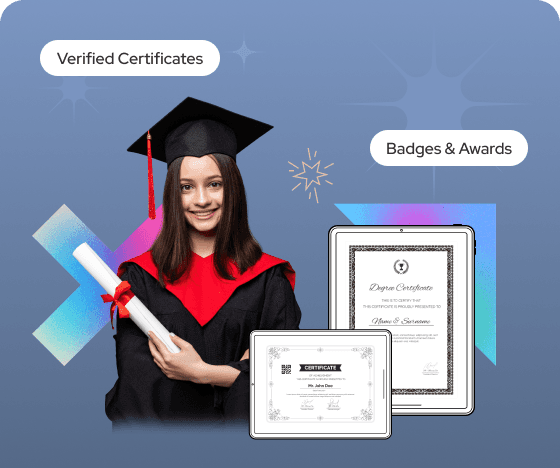
Credentials issued through a platform such as TruScholar can include a QR code or verification link. When the recipient opens it, they can access an issuer-controlled verification record containing relevant details, such as the learner’s name, qualification, issuing institution, issue date and credential status, depending on the configuration. This gives employers and other recipients a way to check the information provided by the university rather than relying only on a document shared by the applicant.
For learners, sharing can also be more convenient. They can provide a verification link when applying for a job, pursuing further studies or submitting qualifications for another opportunity.
However, verification has an important boundary. A QR code does not automatically establish national recognition, equivalence or legal authentication. It helps confirm the issuer-provided record. Any additional requirements set by employers, receiving universities, government authorities or overseas institutions still need to be followed.
Managing Credentials After Issuance
A university’s responsibility does not end when a credential is delivered. Academic records may need to be corrected, reissued or updated if an authorised review identifies an error.
For example, an alumnus may report a spelling mistake in their name. The university should first check the request against its official records. If a correction is approved, the updated credential can be issued through the institution’s authorised process.
It is also useful to maintain a clear history of credential activity. Depending on the platform’s configuration, institutions can manage statuses such as active, corrected, superseded or revoked. These statuses help recipients understand whether a credential is current and whether an earlier version has been replaced. Read more about managing the complete ijazah lifecycle.
Role-based access and audit trails can support this work by recording authorised actions and helping institutions track who accessed or managed a credential.
This becomes especially valuable as universities move from issuing credentials for one graduating batch to managing digital records across several years.
Bringing the Credential Journey Together with TruScholar
For Indonesian universities, digital credentials are not just about making certificates paperless. They offer an opportunity to connect the different stages of academic record management, from approved source data and issuance to learner access, sharing and verification.
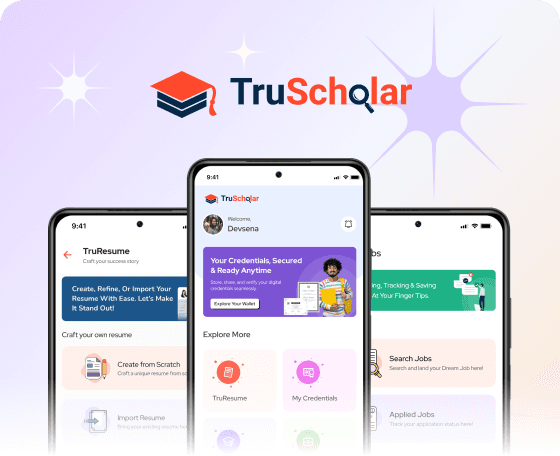
TruScholar supports this process through digital credential creation, bulk issuance, institutional templates, approval workflows, QR-based verification and a learner wallet. Universities can organise credential issuance around their approved data and internal responsibilities, while giving students and alumni a more convenient way to access and share their qualifications.
Institutions can begin with a selected credential type or graduating batch, review the workflow and then expand as their requirements develop. Where connections with existing academic or administrative systems are needed, the integration scope can be assessed separately.
The important thing is to keep institutional authority and data accuracy at the centre of the process. A digital credential should be easy to access, but it should also be traceable to the institution that issued it and the information that institution approved.
Ready to connect issuance, verification and learner access at your university? By connecting these steps, Indonesian universities can reduce repetitive administrative work and make academic credentials more useful throughout a graduate’s journey. Connect with TruScholar to plan the digital credential issuance for your Indonesian university.
Paper credentials add a lot of paperwork, from generating and organising them to issuing and verifying them. At every major step, there are several smaller ones. For example, when an alumnus asks for a duplicate certificate, the credentials have to be located, checked against institutional records, scanned or reproduced, approved and finally shared. Repeat this for every graduating batch, and it becomes a considerable administrative task.
For Indonesian universities, managing ijazah (diploma or degree certificates), transkrip akademik (academic transcripts) and other student records is an ongoing responsibility. These documents are important long after graduation. Alumni may need them for employment, further education, professional opportunities or applications abroad.
Digital credentials can make this process more manageable. But the objective is not simply to replace printed certificates with PDFs. Universities need a connected process in which credentials are created from approved information, issued by the right authority, delivered securely and made easy to verify.
So, how can Indonesian universities bring these steps together? Let’s look at the process.
Start with Institutional Authority and Approved Records
Before issuing digital credentials, a university needs to establish who is authorised to issue them and which information should be used.
This may sound straightforward, but academic records often pass through several departments. Faculties maintain programme-related information, examination offices manage marks and results, registrars oversee academic records, and authorised officials approve final awards. The exact workflow varies between institutions.
For instance, a student’s transkrip akademik may contain information maintained by the examination department, while the final ijazah is approved through a separate institutional process. A digital credential should reflect the information that the university has formally approved, not simply whatever data happens to be available in a spreadsheet.
It is useful to define the source of truth for each credential type. Universities can identify which system or department provides the student’s name, student ID, programme, completion status, grades and award date.
This is also where institutional authority matters. A university-issued degree credential should be approved through the university’s recognised internal process. A digital platform can support the workflow, but it does not independently grant the authority to award a qualification.
Preparing Data for Digital Issuance
Once the source of information and approval responsibilities are clear, the next step is preparing the data.
Universities may already store student information across an academic information system, student information system, examination database or other administrative software. Some may also rely on spreadsheets and manually maintained records for particular programmes or older batches.
Before issuing credentials, the relevant information needs to be checked for completeness and consistency. Common fields include:
Student details: name and identification or registration number
Award details: programme and qualification awarded, faculty or department, and graduation or completion date
Results: academic results, where applicable
Issuance details: credential ID and authorised signatory details
For Indonesian institutions, fields such as NIM (Nomor Induk Mahasiswa, or student identification number), program studi (study programme) and tahun kelulusan (graduation year) can help organise records and identify the correct learner.
Data preparation also helps catch small but important errors. A spelling difference in a student’s name, an incorrect graduation year or a mismatched student number can create problems later when the credential is shared with an employer or another institution.
Universities can begin with approved spreadsheet uploads or explore integrations with existing SIS, academic systems or ERP platforms. Where an integration is planned, the institution should first assess system compatibility, available APIs, data permissions and the fields that need to be exchanged. An integration should not be assumed to exist automatically.
Issuance Through an Organised Workflow
After the data is prepared and checked, credentials can be generated digitally.
Instead of creating every certificate individually, universities can use bulk issuance to process an entire graduating batch. Approved student information can be uploaded through a spreadsheet or transferred through a configured system integration, where available. The platform can then generate credentials using institution-approved templates. This can be particularly useful during graduation periods, when administrative teams need to process large numbers of ijazah and other academic documents within a limited time.
The university can also maintain its branding through templates that include its name, logo, credential details and authorised signatory information. Where needed, institutions can prepare Indonesian-English certificate formats for learners who may share their qualifications internationally. The language of the credential, however, does not replace certified translation or other official requirements where those are requested.
Approval should remain part of the issuance process. Rather than making every generated credential immediately available, universities can include review and authorisation stages. Designated personnel can check the information before the final credential is released.
This keeps the process organised while ensuring that the institution remains responsible for what it issues.
Delivering Credentials to Learners
Generating a credential is only one part of the process. Students and alumni also need a convenient way to receive and access it.
With paper-based processes, graduates may need to collect documents from campus or contact the administration office to request another copy. Digital delivery can reduce some of these routine steps.
Once approved, a credential can be shared through an email or SMS link, depending on the institution’s configured delivery options. Learners can access the credential online and retain a downloadable copy where the platform supports it.
A learner wallet can make access even more convenient. Instead of searching through old emails or device folders, graduates can keep credentials issued through participating institutions in one place. They can return to their ijazah, transcripts or other digital certificates when needed and share them with relevant recipients.
This is particularly useful for alumni who may have graduated several years ago and no longer have regular contact with their university. They can access their issued credentials without treating every request as a fresh administrative exercise.
It is worth noting that a wallet does not automatically collect every qualification a learner has ever earned. Its contents depend on credentials issued through participating institutions and any supported import processes.
Sharing and Verifying Digital Credentials
A digital credential becomes much more useful when another person can check its authenticity.
Think of a graduate applying for a job. The employer may ask for proof of their degree or academic results. With a paper certificate, the employer may have to contact the university or request additional documentation. A digital credential can make the initial verification process simpler.
Credentials issued through a platform such as TruScholar can include a QR code or verification link. When the recipient opens it, they can access an issuer-controlled verification record containing relevant details, such as the learner’s name, qualification, issuing institution, issue date and credential status, depending on the configuration. This gives employers and other recipients a way to check the information provided by the university rather than relying only on a document shared by the applicant.
For learners, sharing can also be more convenient. They can provide a verification link when applying for a job, pursuing further studies or submitting qualifications for another opportunity.
However, verification has an important boundary. A QR code does not automatically establish national recognition, equivalence or legal authentication. It helps confirm the issuer-provided record. Any additional requirements set by employers, receiving universities, government authorities or overseas institutions still need to be followed.
Managing Credentials After Issuance
A university’s responsibility does not end when a credential is delivered. Academic records may need to be corrected, reissued or updated if an authorised review identifies an error.
For example, an alumnus may report a spelling mistake in their name. The university should first check the request against its official records. If a correction is approved, the updated credential can be issued through the institution’s authorised process.
It is also useful to maintain a clear history of credential activity. Depending on the platform’s configuration, institutions can manage statuses such as active, corrected, superseded or revoked. These statuses help recipients understand whether a credential is current and whether an earlier version has been replaced. Read more about managing the complete ijazah lifecycle.
Role-based access and audit trails can support this work by recording authorised actions and helping institutions track who accessed or managed a credential.
This becomes especially valuable as universities move from issuing credentials for one graduating batch to managing digital records across several years.
Bringing the Credential Journey Together with TruScholar
For Indonesian universities, digital credentials are not just about making certificates paperless. They offer an opportunity to connect the different stages of academic record management, from approved source data and issuance to learner access, sharing and verification.
TruScholar supports this process through digital credential creation, bulk issuance, institutional templates, approval workflows, QR-based verification and a learner wallet. Universities can organise credential issuance around their approved data and internal responsibilities, while giving students and alumni a more convenient way to access and share their qualifications.
Institutions can begin with a selected credential type or graduating batch, review the workflow and then expand as their requirements develop. Where connections with existing academic or administrative systems are needed, the integration scope can be assessed separately.
The important thing is to keep institutional authority and data accuracy at the centre of the process. A digital credential should be easy to access, but it should also be traceable to the institution that issued it and the information that institution approved.
Ready to connect issuance, verification and learner access at your university? By connecting these steps, Indonesian universities can reduce repetitive administrative work and make academic credentials more useful throughout a graduate’s journey. Connect with TruScholar to plan the digital credential issuance for your Indonesian university.